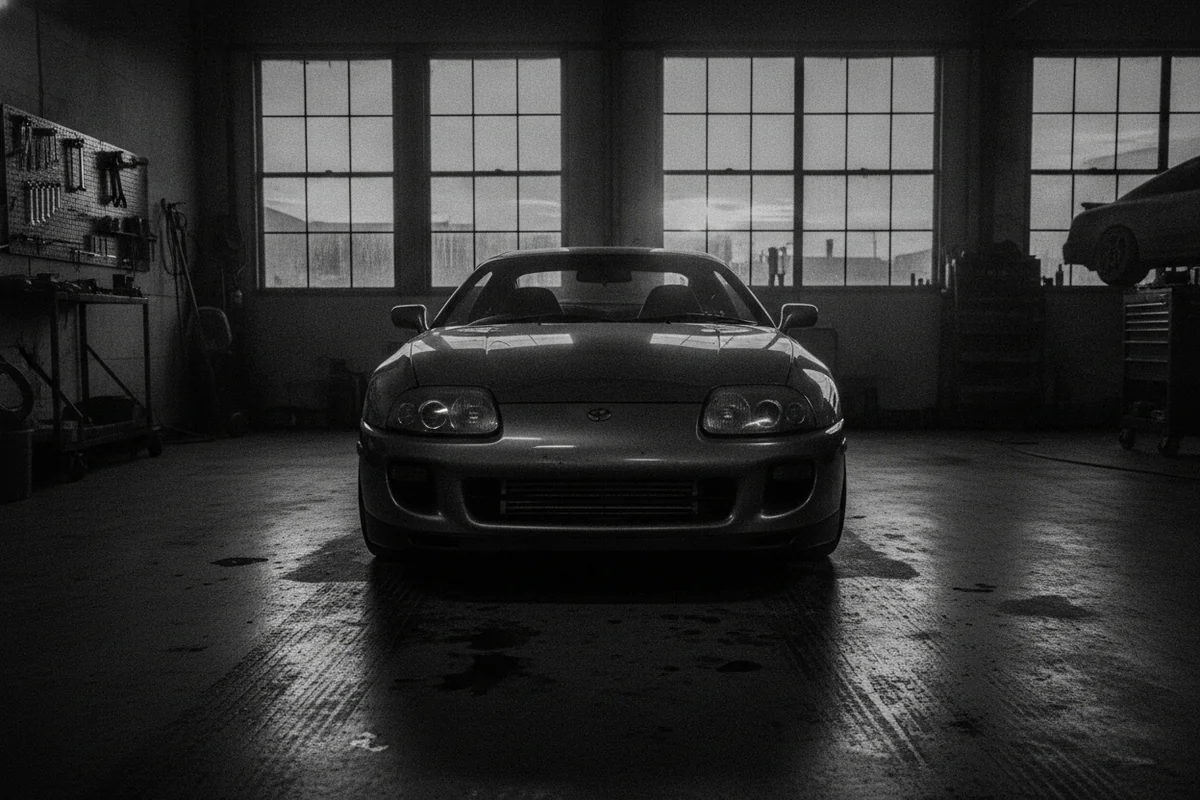
Ask someone outside car culture to name a collectible Toyota and they will say Supra, every time. Fair enough - the A80 with its 2JZ and its Fast and Furious cameo wrote itself into pop culture in a way that is almost impossible to compete with. But spend any time around serious Toyota enthusiasts and you realize the Supra is almost a tourist attraction. The cars these people actually obsess over, hunt down, and rebuild from the chassis up are a different list entirely.
AE86: the car that made a religion out of a lightweight coupe
The Toyota Corolla AE86 - sold in the US as the Corolla GT-S and known everywhere else simply as the "hachi-roku" (Japanese for 86) - was never a supercar. It made around 128 horsepower from a 1.6-liter twin-cam engine. By almost any measurable standard it is a modest car. And yet it has a cult following that would embarrass machinery with three times the power.
Part of it is Keiichi Tsuchiya, the "Drift King," who made the AE86 synonymous with the style of driving that eventually became its own motorsport category. Part of it is Initial D, the manga and anime series that turned a mountain-pass-drifting AE86 into a symbol that reached teenagers across the world who had never heard of Tsuchiya. But honestly, the car earns it on its own terms. Rear-wheel drive, naturally aspirated, with a chassis light enough that a skilled driver can feel everything. People who build them talk about feedback in a way that sounds almost philosophical.
Clean examples are genuinely difficult to find now. Rust ate a lot of them, and the ones that survived often got modified past recognition. A stock or tastefully restored AE86 in good shape will pull real money at auction, which still surprises people who remember seeing them parked outside community college classrooms in the 1990s.
MR2: three generations, three completely different cars, one devoted following
The MR2 ran from 1984 to 2007 across three generations that shared almost nothing except a mid-engine layout and the Toyota badge. The W10 (first gen) was a small, sharp, almost playful machine - cheap to run, easy to love. The W20 went full sports car, turbocharged and wide-bodied, with a reputation for snap oversteer in the wet that kept it honest. The W30 (the Spyder) was a roadster that somehow cost less than a used WRX and got largely ignored at the time.
Each generation has its own community, which is unusual. Most multi-generation models end up with owners who prefer one era and tolerate the others. With the MR2 the camps are distinct enough to feel almost tribal. W20 turbo owners will explain at length why the reputation for handling difficulty is overblown if you understand weight transfer. W30 Spyder owners tend to be the people who value the actual driving experience over the idea of the car. The W10 crowd just seems to be having the most fun.
The W20 turbo in particular has appreciated steeply since around 2018. Low-mileage examples that were sitting unsold on used lots for $6,000 in 2015 now trade at two to three times that, sometimes more. People saw it coming; not enough of them acted on it in time.
Land Cruiser: the one Toyota that crossed every subculture
The Land Cruiser's collector status works differently from anything else on this list because it crosses so many different communities. Off-road builders in the American Southwest revere the FJ40 the way custom car people revere early Broncos - as the purest expression of the platform before comfort and electronics softened everything. Overlanding enthusiasts treat the 80 Series (1990-1997) as close to the ideal expedition vehicle: reliable enough to cross a continent, fixable with basic tools, tough enough to not require worrying about it.
Then there is the simple investment angle. An FJ40 in solid condition is a $40,000-plus truck without any modifications. The 80 Series has been climbing for years and good examples now regularly cross $30,000 even with significant mileage. The 100 Series is starting to follow the same arc. Toyota stopped selling the Land Cruiser in the US after 2021, which only accelerated the attention on used examples.
What is interesting about Land Cruiser culture is the depth of institutional knowledge. There are owners who have run the same truck for 300,000+ miles and documented every repair in forums that go back to the early internet. It is less about the car as an object and more about a community that genuinely knows these machines inside out. That kind of knowledge base is part of what makes the platform durable as a collector vehicle.
Celica: the one that keeps getting rediscovered
The Celica ran for seven generations from 1970 to 2006 and spent most of that time being slightly underappreciated, which is almost a tradition at this point. The early "liftback" generations have the vintage appeal - long hood, fastback roofline, the kind of shape that makes sense on a poster. The fourth-generation GT-Four (ST165/ST185/ST205) built a serious reputation in rally, winning the World Rally Championship three times in the early 1990s with Carlos Sainz and Didier Auriol. And then Toyota stopped making it.
The GT-Four in particular is now a legitimate collector car that most casual Toyota fans have never heard of. Right-hand-drive ST205 examples imported from Japan carry a premium. The homologation requirements meant Toyota built a version of the car with a 255-horsepower turbocharged engine and all-wheel drive just to go racing - that is the kind of backstory that drives values.
Even the later front-wheel-drive Celicas, which took criticism at the time for being too soft, have started finding an audience among younger collectors who value the clean styling over anything the spec sheet says.
The pattern behind all of them
What connects the AE86, the MR2, the Land Cruiser, and the Celica is that each one earned its reputation through actual use rather than marketing. The AE86 became legendary because people drove it hard and found it rewarding. The Land Cruiser built its following by surviving conditions that ended other vehicles. None of them needed a movie to explain why they mattered.
If you want to see how deep Toyota enthusiasm actually runs - the builds, the liveries, the rally heritage and mountain-pass iconography - Toyota wall art and gifts pulls together a decent range of prints and framed pieces that reflect that culture rather than just the obvious references.
The Supra will always be the name people reach for first. But the collectors who know what they are looking for reached past it a long time ago.