
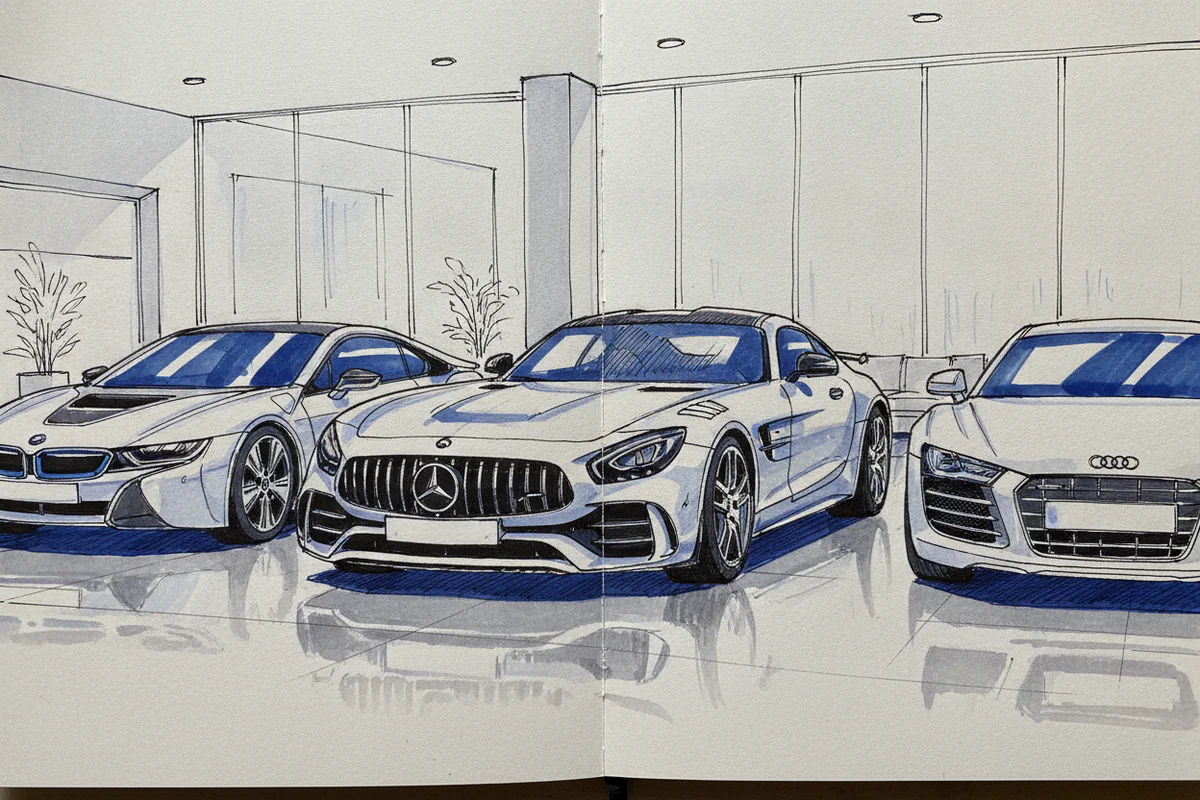
Ask someone which German luxury brand they drive and you'll usually get more than a one-word answer. You'll get a brief autobiography. The BMW owner will tell you about the rear-wheel drive. The Mercedes driver will mention how long their family has bought from the same dealership. The Audi person will bring up Torsen differentials before you've finished your coffee. The loyalty these three brands generate goes well beyond preference - it borders on identity, and the cultures around each one are genuinely distinct in ways worth looking at closely.
BMW loyalists: the driving thing is real
BMW fans will tell you the brand is about driving, and honestly, they're not wrong to keep saying it. The rear-wheel-drive platform, the 50/50 weight distribution engineers have chased since the E30 era, the manual gearbox that BMW kept offering in the M3 longer than almost any competitor - these aren't marketing fictions. The hardware backed the claim for a long time.
What makes BMW loyalty particularly intense is that it's built on feel, which is personal and therefore hard to argue with. A 3 Series owner who learned to drive on an E46 will describe the steering feedback with the kind of detail usually reserved for wine. And when BMW shifted toward heavier, softer, more comfort-oriented cars through the 2010s - the F30 generation getting a lot of that criticism - the loyalists didn't quietly move on. They got loud about it online, formed forums, rewatched Chris Harris videos. The attachment survived real disappointment, which is a decent test of loyalty.
There's also a competitive streak in BMW culture that the other two don't quite match. BMW owners track days. They join BMW Car Club of America chapters that actually do autocross events, not just dinners. The brand's motorsport history - Formula 1 engines, the M1, touring car championships - feeds a genuine performance mythology. Some of that is tribalism, sure. But a lot of it is people who actually use the performance capability and want to be around others who do the same.
Mercedes devotees: generational, quiet, stubborn
Mercedes loyalty operates on a different clock. It tends to run in families. A surprising number of Mercedes owners will tell you their parents drove one, or their grandparents did - and this isn't a coincidence. Mercedes cultivated a reputation for engineering durability that became self-reinforcing: the W123 diesel sedans from the late 1970s that routinely crossed 500,000 miles became legend, passed down as actual vehicles and as stories. That reputation outlasted the era that earned it.
The culture around Mercedes is quieter than BMW's. There's less forum drama, fewer heated arguments about which generation was the real one. Mercedes owners tend toward a kind of settled confidence in their choice - not smugness exactly, more like they feel no particular need to justify it. The S-Class has been the reference point for luxury sedan technology for fifty years, introducing airbags, anti-lock brakes, and active suspension to production cars before most competitors had them on a concept. Fans of the brand know this history, and it gives them a long view that makes current-generation complaints feel temporary.
AMG buyers sit slightly apart from mainstream Mercedes culture - they skew younger, louder, more interested in the V8 exhaust note than in the brand's engineering heritage. But the core Mercedes loyalist is patient. They'll wait for an S-Class refresh rather than cross-shop. That's a specific kind of devotion.
Audi quattro fans: the engineers' fan club
Audi attracts a certain type. The person who read about the original quattro rally program before they were old enough to drive. The person who can explain the difference between Torsen, crown gear, and electronic quattro systems without being asked. Audi loyalty is almost academic in flavor - fans engage with the brand the way enthusiasts engage with a difficult subject they've chosen to master.
The quattro all-wheel-drive system is the anchor. Introduced in 1980 and dominating the World Rally Championship so thoroughly that the FIA eventually had to create new regulations to limit it, quattro became the kind of origin story a brand can build a culture around for decades. And Audi did exactly that. Every all-road, every RS model, every winter driving story told in a parking lot traces back to that mythology.
Audi fans also tend to appreciate design with unusual seriousness. The aluminum space frame on the A8, the TT's almost absurdly consistent silhouette across three generations, the interior material choices that influenced every German competitor's cabin design through the 2000s - these details matter to Audi people in a way that goes beyond brand pride. There's an aesthetic commitment that attracts designers, architects, and engineers disproportionately, or at least that's the pattern you notice if you spend time in Audi owner communities.
The complaint you hear from Audi loyalists is that the brand doesn't get enough credit. BMW has the driving culture mythology, Mercedes has the heritage mythology, and Audi - which genuinely innovated in all-wheel drive, in aluminum construction, in interior quality - gets positioned as the junior partner in the German trio. That mild grievance actually strengthens loyalty rather than eroding it. Audi fans feel like they know something other people are missing.
So who's actually more devoted?
The honest answer is that they're devoted in incompatible ways, which makes direct comparison a bit slippery. BMW fans are the most vocal and the most likely to act on their loyalty - they go to track days, they buy merchandise, they argue on forums with genuine heat. Mercedes fans are probably the most durable: the loyalty transfers across generations and survives product cycles that would shake a more performance-focused relationship. Audi fans are the most intellectually committed - they tend to know the most about what they own and care most about being right in their choice.
If I had to pick one fanbase as the most devoted in raw terms, I'd go with BMW - partly because devotion that survives real product disappointment (and the F-series cars genuinely disappointed a lot of people) is devotion worth taking seriously, and partly because the community infrastructure is there: the clubs, the events, the forums with 400,000 posts about suspension geometry. BMW car art prints outsell the other two in automotive poster searches by a noticeable margin, which is a small but telling sign of which fanbase is most likely to put the brand on their wall at home.
Mercedes loyalty might run deeper in individual families, and Audi culture has a quiet intensity that BMW fans sometimes underestimate. But for sheer observable, countable, expressed devotion - the kind you can see in events attended and money spent and arguments started - BMW's loyalists take it. Barely. And they'd want you to know exactly why.