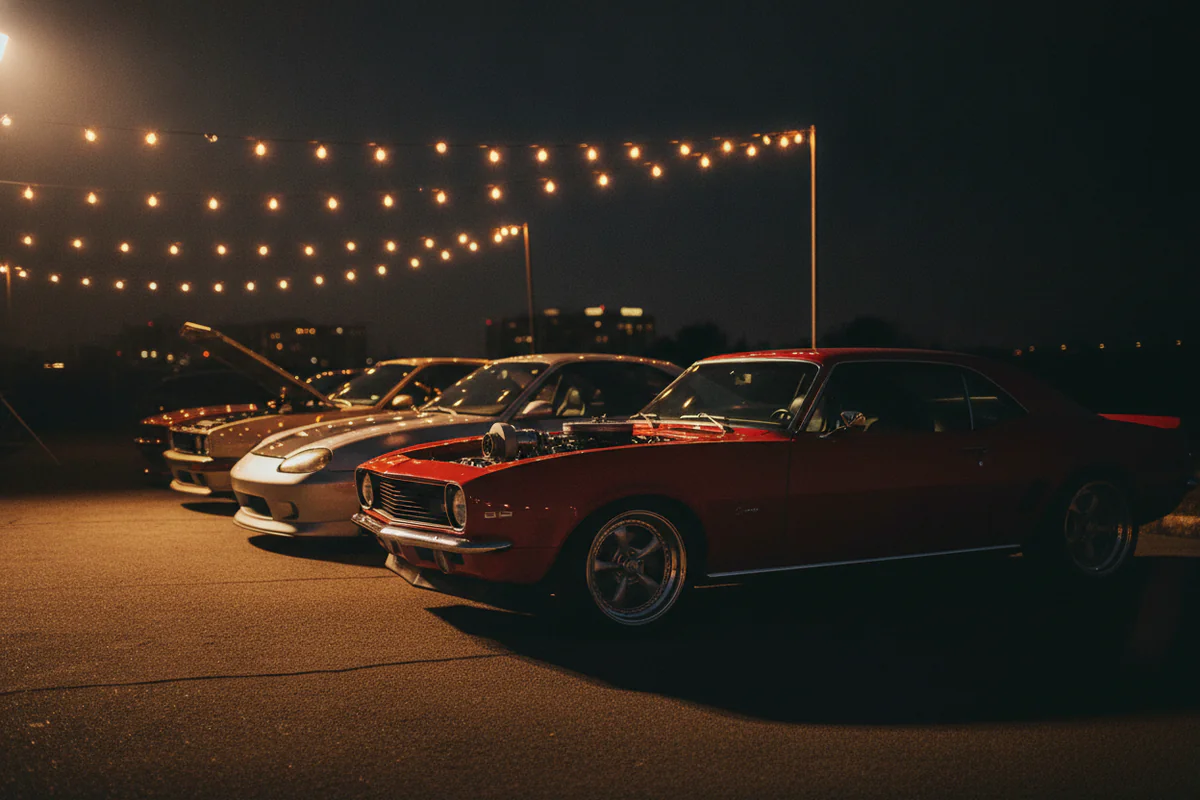
Same parking lot, very different vibe
From a distance they can look identical - a field or parking lot full of interesting cars, people wandering around with coffee or energy drinks, a few folding chairs out. But the car meets vs car shows difference becomes obvious within about ten minutes of being there, once you understand what each event is actually for.
One is a gathering. The other is a competition, or at least an evaluation. That single distinction shapes everything: who shows up, how people behave, how you're expected to act as a visitor, and what counts as rude.
What a car meet actually is
A car meet is informal by design. Someone - often a shop, a local club, or just a person with a large Instagram following - picks a time and place, posts it, and people show up. There's usually no registration, no entry fee, no judging, and no trophies. The whole point is to hang out around cars you wouldn't normally see in the same place.
Meets tend to cluster by theme. You'll find JDM meets, Euro meets, classic truck meets, stance meets, track-day-adjacent meets where everyone's running Nurburgring stickers and pretending their daily driver sees track time. The theme isn't always strict - plenty of meets are open to anything interesting - but there's usually a loose gravitational pull toward a particular style.
The atmosphere at a good meet is genuinely relaxed. You can walk up to almost any car and ask the owner about it, and nine times out of ten they'll tell you more than you asked for. Hoods are up not because anyone told them to but because the owner wants to show you what's under there. That's the whole point.
Etiquette at a meet
A few things that will mark you as someone who gets it - and a few that will mark you as the person everyone quietly watches near their car.
- Ask before you touch. Leaning on someone's hood, even to look closer at the engine, is a fast way to annoy people who spent months on a paintjob.
- If a car door is closed and the owner isn't nearby, don't open it to peer inside. Wait, or move on.
- Rev requests are a mixed bag. Some owners love it. Others are tired of being asked. Read the room before you mime a throttle blip at someone.
- Foot traffic flows around the cars, not through. If someone's trying to photograph a car from the front, don't stand in the shot for five minutes.
- Don't block other cars trying to leave. Meets disperse suddenly and all at once, usually when the security guard gets the call to clear the lot.
Most of this is just basic spatial awareness and not being grabby. The unwritten rule is: treat the cars like you'd want someone to treat yours.
What a car show actually is
A car show is a structured event with some form of judging or voting, and usually an entry process. You might register weeks in advance, pay a show fee, and commit to arriving at a specific time so your car is in its designated spot before the public gates open. That's a meaningfully different commitment than just rolling up on a Saturday morning.
Shows range wildly in formality. A local charity show in a town square might have ten categories and a panel of three judges from the dealership that sponsored the event. A major concours like Pebble Beach has judging criteria so detailed that the wrong type of period-correct clamp under the hood can cost you points. Most shows fall somewhere in between - regional events where the judging is real but the atmosphere is still friendly.
The cars at a show are typically finished to a higher standard than what you'll see at an average meet, because they're being evaluated. A lot of show cars never see rain. Some live in climate-controlled garages and come out twice a year. You'll occasionally see a detail kit come out mid-day so the owner can buff off a fingerprint before the judges walk by. Anyway - that level of preparation is part of what you're there to appreciate.
How to behave at a judged show
The touch-nothing rule is even more important here than at a meet, because the stakes are higher for the owners. A few specific things to keep in mind:
- Many shows have a rope or barrier around the judged vehicles during the judging window. Stay outside it even if no one's watching.
- If you're a spectator (not an entrant), give judges room to work. They're not there to chat while they're actively scoring.
- Photography is generally welcomed, but check whether flash is allowed close to certain vehicles - some owners will ask you not to.
- Voting categories at people's-choice shows are usually tracked by ballot or token. If you want your favorite car to win, actually vote - don't assume someone else will.
One thing that surprises a lot of first-timers: show entrants are usually happy to talk during the open public hours, before or after judging. The impression that show people are more guarded than meet people isn't really true once the formal part is done.
The practical stuff - timing, cost, what to bring
Meets are almost always free to attend as a spectator and free or low-cost to show your car. They happen year-round in warmer climates and seasonally in places with real winters. Shows tend to charge a spectator admission - anywhere from a few dollars for a small local event up to $50+ for a ticketed regional show - and registration fees for entrants can run $25 to $100 depending on the prestige of the event.
For either one, wear comfortable shoes. You'll walk more than you expect. If you're going to a show in direct sun, bring water and something with a brim, because you'll be standing in an open lot for a few hours. Meets often run in the evening to avoid heat, which has its own appeal - the light is better for looking at paint, and the crowd tends to be looser.
If you're thinking about car-themed wall art for a garage or workspace, shows are genuinely useful for finding references - the level of detail on the vehicles there gives you a much better sense of what a well-documented build actually looks like compared to a stock photo.
Which one should you go to first?
If you're new to car culture and want to actually talk to people and learn things, start with a meet. The barrier to entry is low, the conversations happen naturally, and nobody expects you to know what you're looking at. Shows reward some prior knowledge - you'll get more out of them once you've spent time around enough cars to have opinions. That said, a small local show with a people's-choice vote is a perfectly good first event too, especially if you're more interested in looking than socializing.
The real difference between the two isn't formality or expense - it's purpose. Meets exist because people want to be around their cars together. Shows exist because people want their cars recognized. Both are worth your time, and understanding which one you're walking into means you'll read the room correctly from the moment you arrive.