Most people pick a phone case based on the photo on the back. That's fine - you're going to look at the thing 80 times a day - but if the case doesn't actually protect the screen when you drop it face-down on a tile floor, the design doesn't matter much anymore. Figuring out how to choose a good phone case means thinking about both, and the good news is you don't have to sacrifice one for the other.
The one feature that does more work than any material
Raised bezels - sometimes called a "lip" around the screen edge - are the single most important structural feature on a phone case. When the phone lands face-down, a raised bezel means the screen never makes direct contact with the surface. It's hovering maybe a millimeter above the ground, and that millimeter is the whole game. Without it, even a thick rubber case gives your screen basically no help in a flat drop.
To check for this in a store, lay the cased phone face-down on a flat counter and look at it from the side. There should be a visible gap between the screen and the surface. If the screen sits flush, put it back.
The back camera cutout is worth the same test. Camera lenses are easy to scratch and expensive to fix, so a case that leaves the camera module raised and exposed - or has a cutout with no lip - is a weak point most people don't notice until it's too late.
Corner protection: where the physics are actually happening
Phones almost never land flat. They rotate on the way down and hit a corner first, and that's where the impact energy concentrates. A case that's 2mm thick on the flat sides but tapers thin at the corners is basically decorative at the moment that counts.
Look for cases that describe reinforced or "air cushion" corners - the pockets of slightly thicker or more flexible material built specifically to absorb that first corner hit. Some cheaper cases look protective but use the same thickness all the way around with no real engineering behind it. Press your thumb into a corner. If it compresses noticeably more than the flat section, there's something there. If it's rigid all the way around, it's mostly aesthetic.
TPU (thermoplastic polyurethane) handles corner impacts better than hard polycarbonate alone, which is why most halfway-decent cases use a TPU body or a TPU-and-polycarbonate hybrid. Pure hard plastic looks sleek and thin but transfers shock instead of absorbing it. Silicone is grippy and soft but tends to pick up lint aggressively and stretch out of shape over time. Anyway - material matters, but it's downstream of whether the corners and bezel are actually designed well.
Thickness vs. grip: the tradeoff nobody talks about honestly
Thinner cases feel better in the hand and pocket. They also offer less protection, which everyone knows but underweights because thin cases are so much more pleasant to use day-to-day. There's no objectively correct answer here. If you're someone who keeps your phone in a soft bag pocket and mostly drops it on carpet, a slim case with raised bezels probably covers you. If you work outdoors, have genuinely butter hands, or own a very expensive phone, the extra bulk of something thicker is worth it.
Grip texture is underrated. A perfectly smooth hard case on a glass-back phone is a drop waiting to happen - they're slippery on any angled surface. Matte finishes, subtle texturing, or soft-touch coatings all increase friction without making the case obviously "rugged."
Now the part you actually care about: does it look good
A case you find ugly is a case you'll ditch after two weeks and leave your phone naked. So the aesthetics matter practically, not just personally.
Printed cases vary a lot in quality. The two things that degrade fastest are color fading from UV exposure and print peeling at the edges. UV-resistant inks and prints that go under a clear layer (rather than sitting on top) hold up significantly longer. It's worth asking or checking product details before buying a case specifically for its design - a print that looks great on day one but is chalky and scratched by month three isn't worth the money.
Clear cases seem like the neutral option but they yellow noticeably over six to twelve months, especially cheaper ones. If you want to show off the phone's original color, a higher-quality clear case with UV-resistant material will stay clear much longer than the $8 version, even if it doesn't look different in the package.
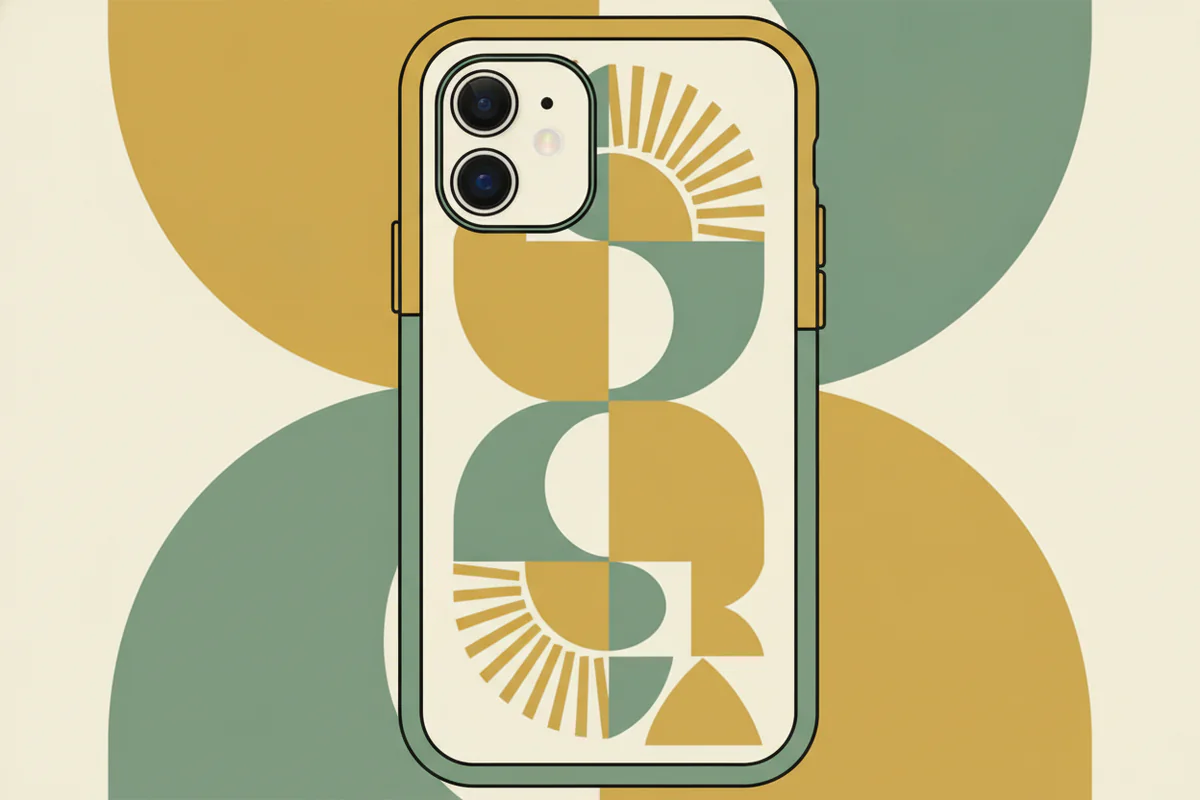
If you want a case with a specific print or artwork - a photograph, a graphic, something that actually means something to you - printed phone cases are worth looking at as a category. The best ones combine a real TPU drop-protection body with the printed design, so you're not trading protection for aesthetics.
A few quick checks before buying any case
- Lay it face-down and confirm the screen has a visible gap from the surface.
- Press the corners - they should feel slightly more compressible than the flat back.
- Check that all ports, buttons, and the camera cutout are accessible without the cutout pressing on the lens itself.
- If it's a printed case, look for information about the ink process - under-laminate prints outlast surface prints.
- If it's clear, look for "anti-yellowing" in the product description. Means nothing on its own but at least signals the manufacturer thought about it.
What you can reasonably skip worrying about
Military drop-test certification (MIL-STD-810G) shows up on a lot of marketing. The test itself is real - it involves dropping from 4 feet onto steel - but passing it doesn't mean the case is better than one without the certification. It just means the manufacturer paid to run the test. Some excellent cases have it; plenty of mediocre ones do too. Use it as a weak positive signal, not a deciding factor.
Waterproofing is worth having if you specifically need it, but most "water resistant" cases just mean splash-resistant, not submersion. If you need actual waterproofing, look for IP68-rated cases specifically, not just cases that use water-related language in the description.
The best case is the one you actually keep on the phone. A mid-range case with good corner protection, a real screen lip, and a design you like will protect your phone better than an expensive case you swap out because you're tired of looking at it. Get the protection basics right first, then pick something you want to carry around for the next year and a half.