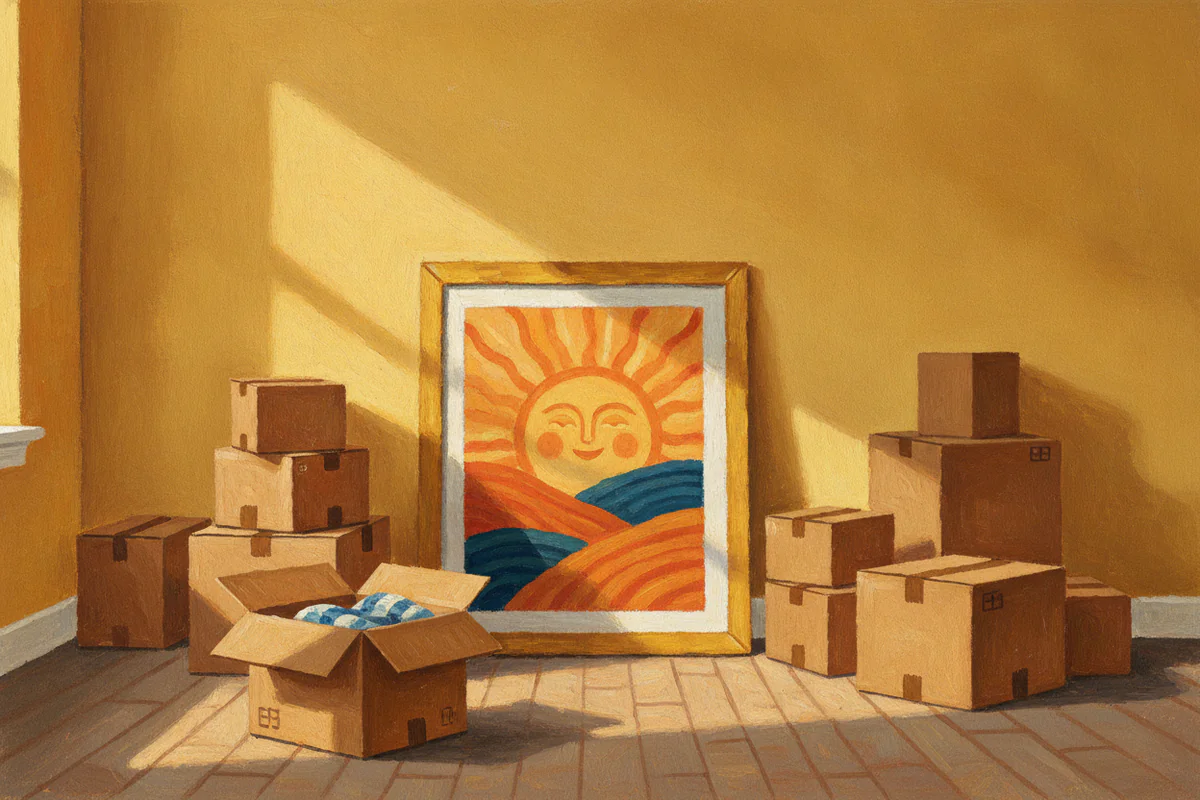
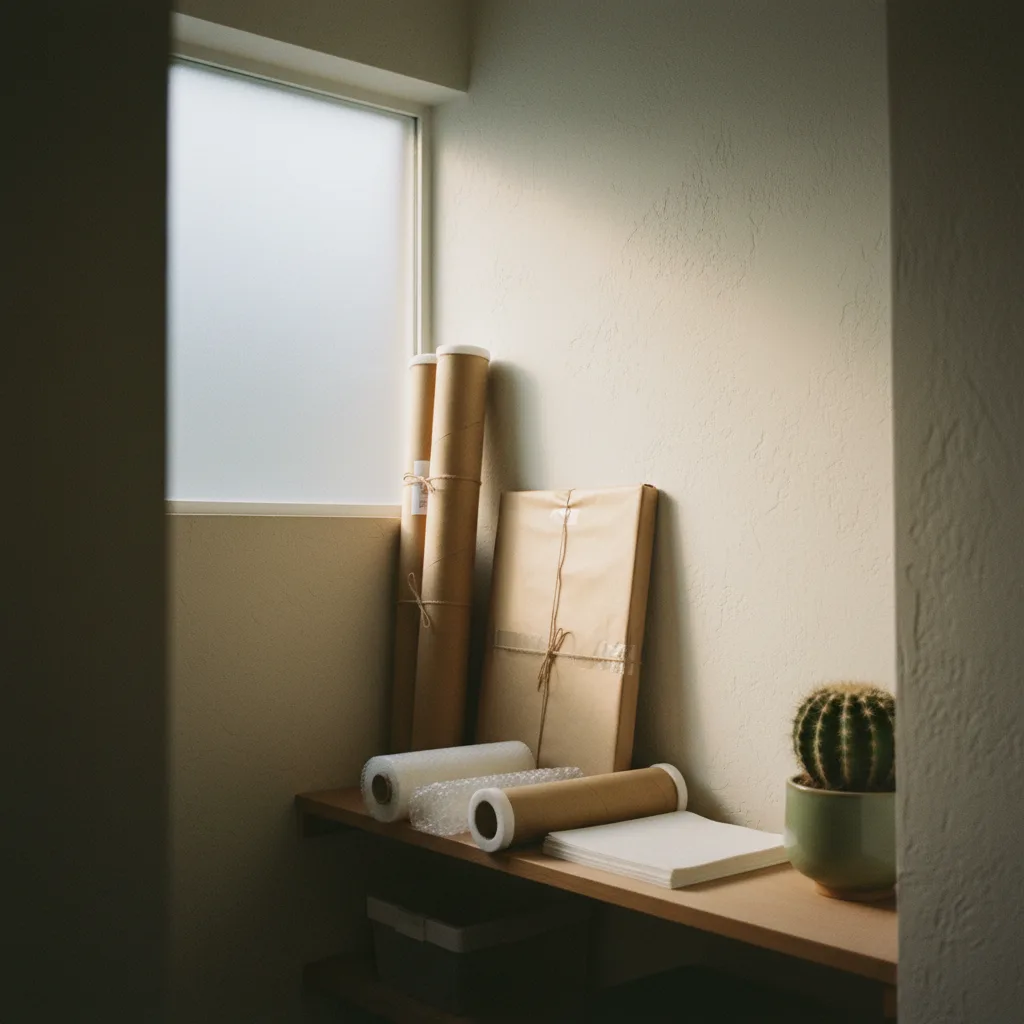
Knowing how to ship wall art safely is one of those things that seems obvious until you open a tube and find a creased poster or pull a canvas out of a box with a corner punched through the frame. It happens constantly, and almost none of it needs to happen. The fixes are cheap and take maybe ten extra minutes.
The real enemies: corners, moisture, and lazy labeling
Corners go first. On a framed canvas, a stretched canvas, even a rolled poster - the corner is where the force concentrates when a box gets dropped or shoved. If you are not reinforcing corners, you are hoping the shipping company is gentle. They are not.
Moisture is the quiet one. A poster left in a damp garage for two weeks before it ships, or a canvas that picks up humidity during transit, can yellow or warp in ways that are not fixable. It does not take a flood. A cool, damp storage space is enough.
And labeling - "fragile" stickers do basically nothing. What actually works is building the box so it can survive being tossed without any special treatment, then marking it "this side up" so at least the orientation is right.
How to ship wall art safely: the actual method, step by step
For framed prints and canvases, start by taping a sheet of glassine or wax paper over the face of the print. Do not use regular tape directly on the surface. Then wrap the whole piece in at least two layers of bubble wrap - small bubble for the face, large bubble for the sides and back. Secure it with packing tape, not masking tape.
The box should be rigid, not a repurposed Amazon box that has already been compressed once. Double-wall corrugated is worth the extra dollar. Add two inches of foam or crumpled kraft paper on every side - bottom, top, left, right. The piece should not move at all when you shake the box. If it shifts, add more padding.
For rolled posters, use a rigid tube - not the thin cardboard tubes that feel like paper towel rolls. A thick-walled plastic or heavy cardboard mailing tube with end caps that actually lock. Roll the poster loosely around an acid-free tissue core, face out, and slide it in. Tight rolling causes crease lines along the edges within days.
Metal prints are heavy and the surface scratches easily. Wrap the face in foam padding - not bubble wrap directly, because the bubbles leave impressions if the piece is under pressure. Then box it the same way as a framed canvas, with corner protectors. Seriously, corner protectors. They cost almost nothing.
Storage before and after shipping
If you are storing wall art before it ships - or after it arrives and before it goes up - keep it vertical, not flat. Stacking flat puts pressure on whatever is at the bottom, and that pressure compounds over time. A canvas stored flat under two other canvases for a month will sometimes have a slight warp you cannot fix.
Store in a climate-controlled space if at all possible. Not a basement, not a garage in a humid climate, not against an exterior wall. A bedroom closet is genuinely better than most storage units.
For wall art prints you are keeping long-term, a flat file drawer or a portfolio case beats loose stacking every time. Posters especially - they shift and crease against each other.
What to do when a piece arrives damaged
Photograph everything before you unpack fully. The box, the packaging, the damage. Do it immediately - not after you have moved things around. Most carriers require you to report damage within a short window, sometimes 24-48 hours, and they will ask for photos of the original packaging.
If you bought from a print-on-demand store like EnjoyPoster and the piece arrived damaged in transit, contact support with those photos. A damaged corner on a canvas print or a crease in a poster that arrived rolled too tight - that is something a good store will replace without making you fight for it.
The one thing most people skip
Insurance. If you are shipping something you care about - an original, a large format print, anything over about $50 in replacement value - declare the value and pay the extra. It is usually a few dollars. People skip it, then regret it exactly once.
The whole process is maybe fifteen minutes of extra work and a few dollars in materials. The alternative is a creased poster or a cracked frame and a frustrating week of back-and-forth. Not worth it.