The plain silicone era is winding down
For about a decade, the default move was a clear or matte black silicone case - functional, cheap, invisible. It said "I want protection but I didn't want to think about this." That made sense when phones were changing shape every year and nobody wanted to commit. But phone design has stabilized enough that people are treating their cases more like something they actually chose, and the data from accessory retailers in late 2024 and into 2025 backs that up: printed and textured cases are taking share from the plain category pretty steadily.
So what specifically is moving? A few distinct things, and they don't all appeal to the same buyer.
Print designs - bolder than the "aesthetic" era
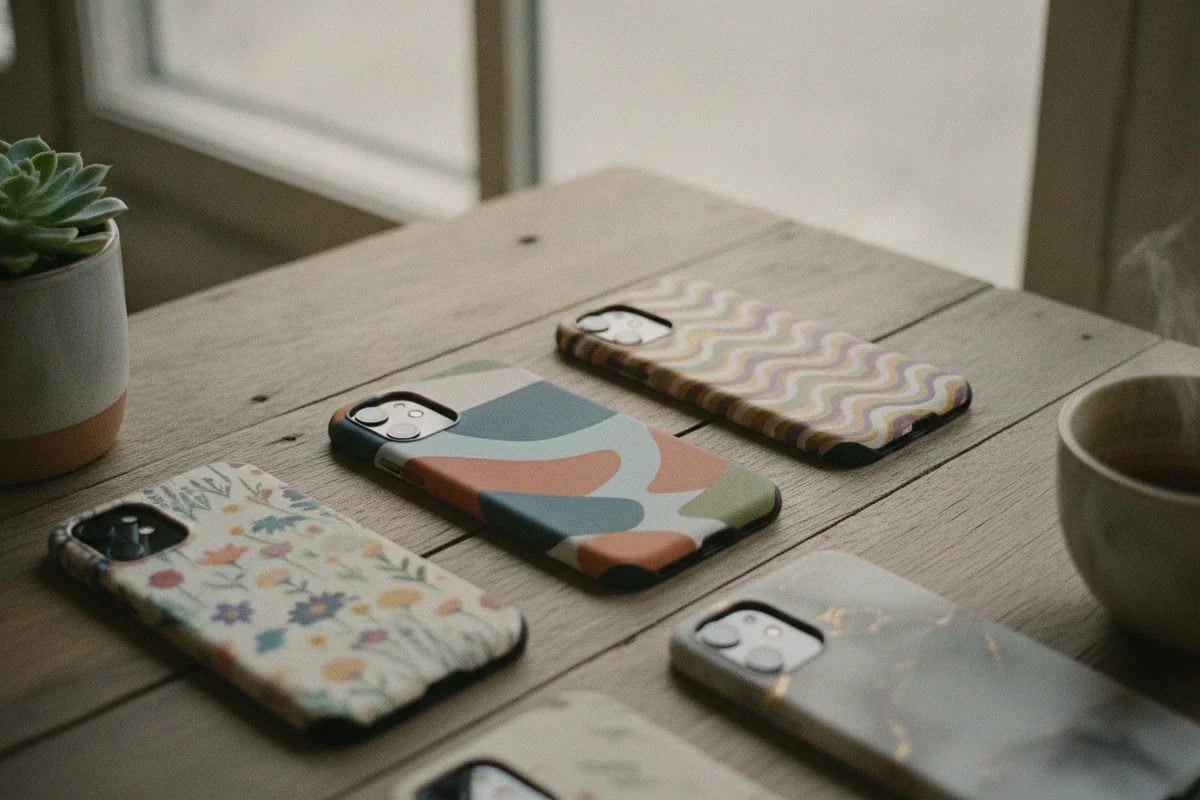
There was a phase where "printed case" meant a pastel abstract blob or a generic marble effect that half the office had. That's fading. What's replacing it in phone case trends 2026 leans harder in both directions - either genuinely bold graphic prints (think high-contrast illustration, vintage poster styles, photo-quality art prints) or prints that are specifically personal to the owner.
The vintage poster angle is worth dwelling on for a second. Retro travel posters, old jazz and concert ephemera, botanical prints from the 1800s - these have been a growing corner of the home decor market for a couple of years now, and the aesthetic is crossing into phone cases because the same person who puts a vintage poster print on their wall wants the same visual language in their hand all day. That coherence between your space and your objects is genuinely a thing people are thinking about now, even if they wouldn't describe it in those terms.
Photo-print cases - a real photograph on the back, not a filter-heavy composite - are also coming back, but with better print quality than the pixelated custom-case sites of 2012. The expectation now is that if you're going to put an image on something you carry everywhere, it should actually look good.
Texture as a deliberate choice
The other big shift is tactile. Plain smooth silicone became so ubiquitous that texture started to feel like a differentiator, and now it's clearly a preference category on its own.
Woven and fabric-effect cases picked up momentum through 2024 and show no sign of slowing. The appeal is partly grip, partly just that they feel different from every other object you touch in a day that's made of glass or polished metal. Linen textures, canvas-effect finishes, even cases that mimic the grain of uncoated paper - these are doing well with people who spend a lot of time at a screen and apparently want something that doesn't feel like a screen.
On the more premium end, MagSafe-compatible leather and leather-alternative cases have carved out a durable niche. The attachment is partly practical (the wallet functionality), but a lot of buyers are picking them purely for the material feel. Genuine aged leather develops a patina - that's a feature, not a flaw, and it's the opposite design philosophy from a clear case that yellows and you replace.
Raised and embossed textures are also growing, especially geometric patterns that add grip in a specific place. These started as a function fix and became a look.
Personalization that goes past a name
Custom name cases haven't gone anywhere, but the personalization trend in 2026 is less about slapping text on a product and more about selecting something that specifically matches how you see yourself - or how you want to be seen, anyway.
There's a meaningful difference between "I ordered a custom case with my name on it" and "I found a case with exactly the kind of print I'd put on my wall." The second one doesn't involve any customization tools at all - it's just curation, picking from a wide enough range that something actually fits. Accessory brands that have expanded their print libraries significantly are seeing longer browse sessions and better conversion than brands pushing the "design your own" configurator, which suggests the demand is for good options, not infinite options.
Coordinate cases - latitude/longitude of a meaningful place - have held on longer than most trend forecasters expected, probably because they're personal without being ostentatious about it. Same with cases referencing specific cities, national parks, or local landmarks. Hyper-local identity, basically.
What about durability and protection?
One thing that isn't changing much: people still want actual protection. The shift away from plain silicone is aesthetic, not a move toward fashion cases that offer nothing structurally. The cases gaining ground tend to combine a printed or textured exterior with the same drop-protection internals that made silicone dominant. You don't have to choose between the two anymore, which is part of why the plain case has less of a lock on the sensible-buyer segment than it used to.
MagSafe compatibility is effectively a baseline expectation now for anyone buying an iPhone case above the budget tier, and that's shaping design - the magnet ring creates a constraint that designers are working with rather than hiding, which you can see in cases that incorporate it into the visual design explicitly.
The broader pattern
Looking at phone case trends 2026 as a whole, the thread running through all of it - prints, textures, personalization - is that people are done treating a phone case as purely infrastructural. A phone is out on a table in a meeting, in someone's hand at dinner, face-up next to a laptop for eight hours. It's visible constantly, and for a lot of people that visibility eventually starts to matter.
The plain silicone case made sense when the goal was to disappear. The cases winning now are the ones people actually want to look at.