A homologation special that became something else entirely
The WRX started as paperwork, essentially. Subaru needed to sell enough road cars to qualify the Impreza for World Rally Championship competition under Group A regulations, which required 2,500 production units annually. So in 1992 they built a turbocharged all-wheel-drive Impreza and called it the WRX - World Rally eXperimental - and put it on sale in Japan. Nobody predicted what would happen next.
Within a few years, the Impreza WRX was winning rallies in Sweden, in Argentina, on the tarmac stages of Corsica. Colin McRae took the drivers' title in 1995, which was also the year Subaru won its first constructors' championship. Then Richard Burns won in 2001. Carlos Sainz - who had already been world champion twice in a Celica - defected to Subaru and was competitive again. The car was genuinely fast across every surface type, which was unusual. Most factory rally cars had surface preferences. The Impreza just worked everywhere.
The Subaru WRX rally history that accumulated across those years wasn't just a list of results. It was a personality forming in real time.
Colin McRae and the blue-gold livery
You could probably argue that the 555 British American Tobacco livery did as much for the WRX's cultural footprint as any podium finish. That specific shade of Royal Blue with gold detailing has become one of the most recognised colour combinations in automotive history, which is a strange thing to say about a corporate sponsorship arrangement from 1993. But it's true. Owners still recreate it. Replica decal kits sell steadily. When Subaru brought back a heritage-spec livery for limited events in the 2010s, the internet responded like it was news of actual importance.
McRae himself was a big part of why. He drove fast in a way that looked fast - sideways, committed, sometimes through things rather than around them. The crash rate was not ideal from a championship-points perspective, but it made spectacular television. His 1995 title win in Rally GB at age 27 made him the youngest world rally champion at the time. And he was Scottish, which gave British motorsport fans a proper stake in the WRX story at exactly the moment WRC coverage was growing on terrestrial TV.
Anyway - the point is that the car and the driver merged in public memory in a way that almost never happens cleanly. People don't just remember that Subaru won. They remember how it looked winning.
What the championship record actually looks like
Four constructors' championships: 1995, 1996, 1997, 2001. Three drivers' titles across different eras and different drivers. Over 45 WRC event victories. The 1995-1997 run was the most dominant stretch - three consecutive constructors' titles is something only a handful of manufacturers have managed in WRC history, and Subaru did it with a relatively small team by the standards of Toyota or Mitsubishi's factory operations.
The rivalry with Mitsubishi's Lancer Evolution was the one that really caught public attention. Both cars used turbocharged four-cylinder engines and symmetrical AWD systems. Both were thinly disguised from their road-going versions. Both had obsessive fan bases that overlapped heavily with the import tuning scene that was growing fast in the US, UK, and Australia through the late 1990s. The WRX versus Evo argument became a fixture of internet forums and car park conversations for two solid decades. Some people still haven't resolved it.
How the rally culture migrated into ownership culture
Here is the interesting part: Subaru's WRC program ended after 2008 when the factory team withdrew. The Impreza was replaced by the WRX STI as a standalone model. The competitive era was definitively over. And the fan base kept growing.
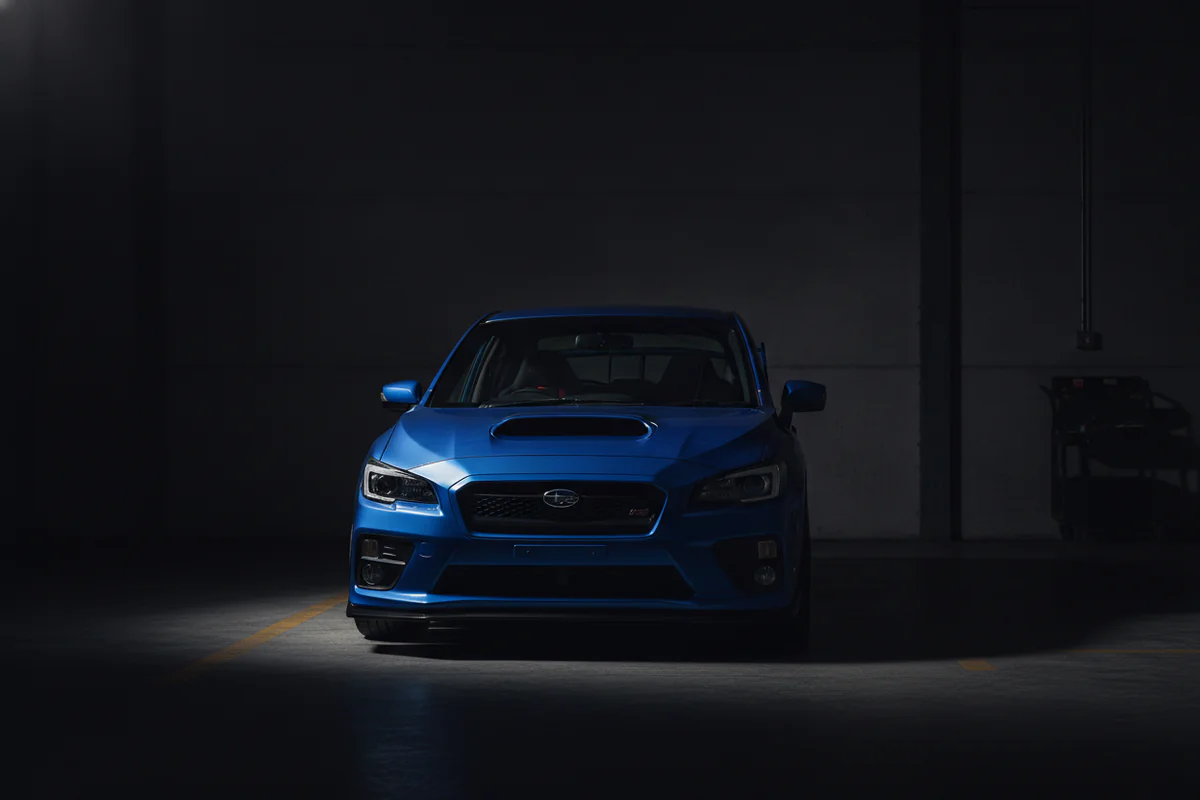
WRX owners modify their cars in ways that trace directly back to the rally program. The first thing most people do is improve the intercooler and tune the ECU - because rally cars ran bigger intercoolers and custom engine maps, and that's just what you do with a WRX. Roof-mounted antenna replacements get swapped for rally-style aerials. Strut braces. Short-throw shifters. The STI's Prodrive Performance Pack offered factory rally suspension geometry. Owners who track their cars obsess over brake bias and differential settings in ways that are far more rally-specific than circuit-specific.
The visual modifications follow the same logic. That blue and gold livery gets reproduced on everything from full wraps to small door decals. Rally number plates appear on cars that have never been near a stage. Peter Solberg's car number. McRae's helmet design recreated as a sticker on a dashboard. It functions like sports memorabilia - which is exactly what it is, really.
For the owners who want to go further with that visual connection, Subaru wall art and gifts give you a way to bring that rally aesthetic into the space where you think about your car, whether that's a garage wall or a home office.
The community that formed around the car
SubaruNet forums were active before most car communities had figured out the internet. NASIOC - North American Subaru Impreza Owners Club - became one of the largest marque-specific automotive communities online, with technical threads that run to hundreds of pages and contain genuinely useful information that you cannot find anywhere else. The culture inside those communities is specific: self-deprecating about the car's quirks (head gaskets, notably), obsessive about staging and rally videos, generally friendly toward Evo owners while maintaining firm positions on which car is correct.
The "Subie wave" - acknowledging other WRX owners on the road - became a recognised thing years before it was written about anywhere. These owners identify with each other partly through the car and partly through a shared understanding of where the car came from. The rally heritage isn't background knowledge. It's active context.
Where it sits now
Subaru brought the WRX back as a separate model in 2022 and updated it again for 2024. The new car gets 271 horsepower from a 2.4-litre turbocharged flat-four, which is solid but not dramatic. It still has symmetrical AWD. It still has the Brembo brakes and the Bilstein suspension on the STI-adjacent trim. But there's no more factory rally program, and the car has grown, and some of the edge has softened. People who loved the 2004 STI feel that. They say so, often.
But the thing about the WRX rally history is that it's now old enough to be genuinely historical rather than just recent context. The 1995 championship was thirty years ago. Colin McRae died in 2007. The cars from the peak years are appreciating - clean low-mileage STIs from 2004-2007 regularly trade at three times their original price. What started as a homologation exercise became a four-championship dynasty and then became a culture that outlasted the program itself by two decades and counting. That doesn't happen by accident, and it doesn't happen to boring cars.