
The decade that automotive history half-forgot
The 2000s sit in a weird place in car culture memory. The '60s get the muscle cars, the '80s get the neon and the excess, and somehow the decade that gave us some genuinely brilliant machines gets reduced to a punchline about chrome trim and early infotainment screens that took 45 seconds to load a map. That's a shame, because the best cars of the 2000s included some deeply good vehicles that quietly went about their business while flashier models grabbed the magazine covers.
These are the ones worth revisiting.
Pontiac Solstice (2006-2010)
GM was in rough shape through most of the 2000s, which made the Solstice feel like a small miracle when it arrived. A rear-wheel-drive roadster with actual proportions - short overhangs, a long hood, a cabin that sat you low enough to feel the road properly. The GXP version with the turbocharged 2.0-litre pushed 260 horsepower, which was enough to genuinely surprise people who'd written it off as a styling exercise.
The interior was pretty grim, honestly. Storage was basically nonexistent and the trunk lid was one of the more awkward designs in recent memory. But the chassis was sorted, the steering had weight to it, and driving one on a back road felt like the engineers had finally been allowed to do something fun. It sold well enough at launch and then GM collapsed and took Pontiac with it. The Solstice never got the second-generation refinement it needed, so people remember the flaws and forget the soul.
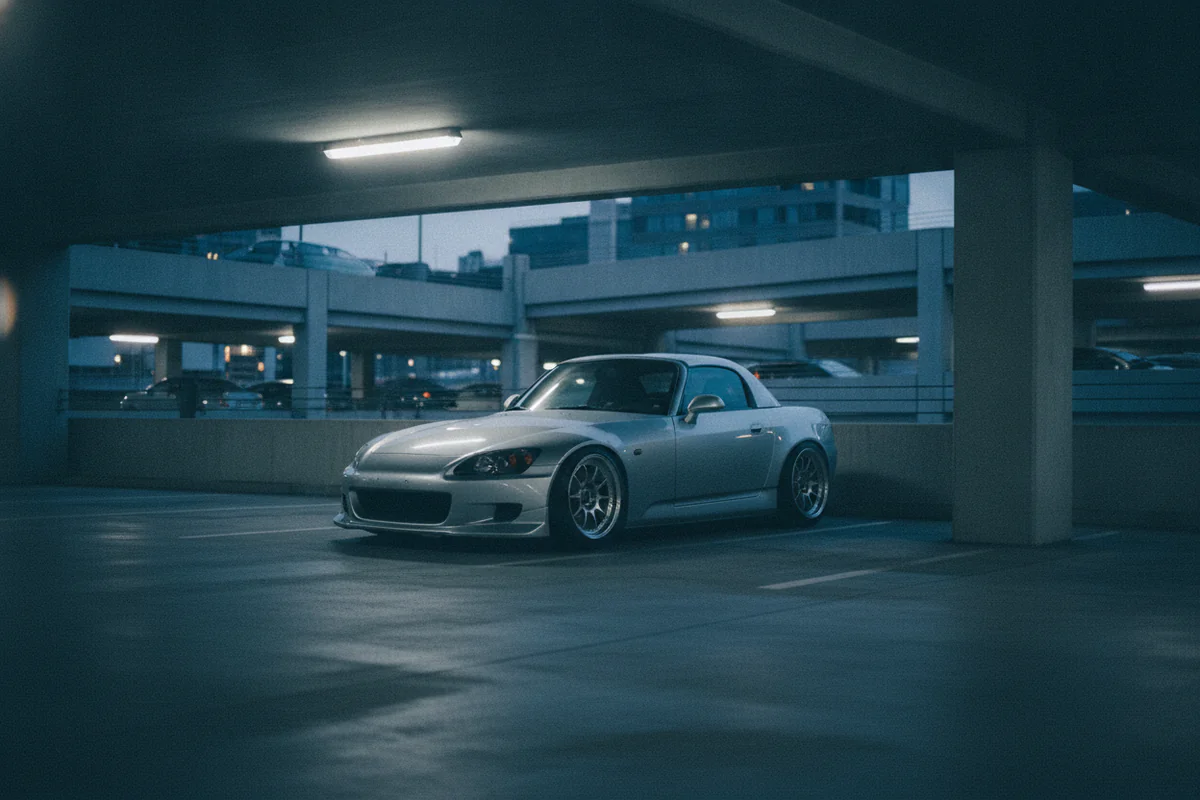
Honda S2000 (1999-2009)
Fine, the S2000 technically started in 1999, but it spent its best years in the 2000s and it belongs on this list. Honda built a 2.0-litre engine that made 240 horsepower without a turbo, which at the time was an almost absurd specific output figure. It did it by spinning to 9,000 RPM, which meant you had to actually work for the power - keep it below 6,000 and it felt a bit flat, push past that and it came alive in a way that almost nothing else in that price range did.
It got overshadowed partly because of its reputation for snapping on you if you lifted mid-corner, which was somewhat exaggerated but not entirely invented. The AP2 revision in 2004 smoothed some of that out. What you had by the end of production was a nearly perfect driver's car that Honda has never quite replaced - and given where the company went through the 2010s, probably won't for a while.
Mazda RX-8 (2003-2012)
The rotary engine is the RX-8's curse and its whole reason for existing. Mazda's Renesis unit was smooth, high-revving, and distinctive in a way that no other engine on the market could match. It also got middling fuel economy, produced relatively modest power on paper (232 hp from a 1.3-litre, though the numbers don't tell the whole story), and needed its oil topped up manually or it would eat itself. Owners who understood that found a car with near-perfect 50/50 weight distribution, a free-revving character unlike anything else, and four actual rear seats accessible through rear-hinged back doors.
The four-seat sports car idea was clever. You could drive your friends somewhere. The whole package made sense if you went in with your eyes open about the engine's needs, and the people who did that tended to love their RX-8s with an intensity that puzzles anyone who only read the depreciation charts.
Ford Focus SVT (2002-2004)
Ford's standard Focus was already one of the better-handling front-wheel-drive cars you could buy in America in the early 2000s - a European-developed chassis that actually worked. The SVT version turned it up. Retuned suspension, a 170-horsepower 2.0-litre, bigger brakes, and a close-ratio five-speed that rewarded smooth, fast gear changes. It cost around $19,000 new. For context, a base Mustang GT at the time was slower through corners and cost more.
Nobody bought it. Or rather, not enough people did for Ford to justify continuing it past 2004. It competed in a segment - the hot hatch - that Americans claimed they didn't want, and then spent the following decade importing GTIs and Civic Type Rs and proving themselves wrong. The SVT Focus was the right car at the wrong moment.
Chrysler 300C (2005-2010)
There's something almost confrontational about the first-generation 300C. Wide, low, upright grille, rear-wheel drive, available with a 6.1-litre Hemi V8 making 425 horsepower in SRT8 trim. This was a large American rear-wheel-drive sedan for around $35,000, which was genuinely unusual in 2005 when the segment had mostly drifted toward front-wheel-drive blandness.
It got dismissed in some corners as a gangster car, which was lazy criticism dressed up as automotive taste. The 300C was a coherent design statement from a company that rarely made those, built on the Mercedes E-Class platform from the DaimlerChrysler merger years, and it drove better than most people expected. The SRT8 version was properly fast. A used 300C SRT8 today is still one of the more interesting things you can buy for under $15,000 if you're the type of person who doesn't mind paying for gasoline.
Subaru Legacy GT (2005-2009)
Subaru's WRX and STI rightly get the attention, but the Legacy GT from this generation was doing something different and arguably more useful. A turbocharged flat-four making 250 horsepower in a midsize all-wheel-drive wagon or sedan. It would do 0-60 in around five seconds, fit a family and their luggage comfortably, and handle a bad winter without drama. The wagon version especially - the Outback Sport GT if you want the American market name - had a practicality-to-fun ratio that almost nothing matched.
It's the kind of car that people who owned one can't stop talking about, and the people who never drove one have no strong feelings about at all. That gap is exactly why it belongs on this list.
Why these cars get forgotten
Most of the cars here got overshadowed for the same few reasons. Some were killed by corporate collapses before they could evolve into something truly great. Some competed in segments American buyers were convinced they didn't want until they did. Some just had one flaw that reviewers repeated until it became the whole story.
The history of the automobile is full of cars like this - the right machine in the wrong moment, or a good idea that needed one more development cycle it never got. The 2000s had more than its share of them, and going back through the decade with some distance is a reminder that the era's reputation for mediocrity was always a bit unfair. There was interesting stuff happening, often in places the market wasn't looking.
Most of these are cheap now. That's either an injustice or an opportunity, depending on how you look at it.