It started, as most things do, with teenagers in thrift stores
Around 2021 or 2022, if you spent any time on the vintage side of Depop or eBay, you'd notice something odd happening to prices. A faded Aerosmith tee from a 2001 tour - the kind that used to sit in a Goodwill bin for $3 because nobody wanted it - was suddenly going for $45. A bootleg Ed Hardy knockoff from 2006, genuinely ugly by most accounts, had a bidding war on it. People were hunting these things down with real intent, and paying accordingly.
That's usually the first sign that a graphic tee comeback trend has some actual legs behind it. Not a brand deciding to reissue something, but regular people driving the demand before the industry catches up.
The 20-year nostalgia rule, and why it keeps working
There's a rough pattern in fashion that goes something like this: whatever was peak mainstream about 20 years ago will eventually get reclaimed by the generation that was young enough during that era to feel nostalgia for it, but old enough to now have purchasing power and some cultural influence. The 1980s got their revival in the early 2000s. The 1990s got theirs in the 2010s. And now here we are, with 2000s graphic tees, low-rise jeans, and chunky sneakers all showing up on the same people who were in elementary school when that stuff was originally everywhere.
It's a little mechanical when you say it out loud like that, but it does keep happening with remarkable consistency. The reason isn't purely cyclical coincidence - it's that early adolescence tends to be when aesthetic preferences really lock in. The clothes, music, and visuals you absorb between ages 8 and 14 tend to carry a disproportionate emotional weight for the rest of your life. So when you're 24 and looking for something to wear that feels good rather than just correct, you often reach back toward that period almost without thinking about it.
Gen Z grew up with the tail end of 2000s fashion as childhood background noise. The Ed Hardy shirts their older siblings' parents were wearing. The giant band tees. The screen-printed skulls and roses and airbrushed wolf faces. None of it was "cool" in recent memory - which, perversely, makes it interesting now.
Ironic vs. sincere - and why the line blurred fast
When graphic tees started reappearing a few years ago, the dominant reading was ironic. You wore the absurd vintage Affliction shirt because it was funny, because the gap between how seriously that aesthetic took itself in 2004 and how it reads now was the whole point. There's a specific pleasure in wearing something that used to be genuinely cringe-worthy, fully aware of that history.
But something shifted. The ironic frame started wearing thin, and what replaced it was something more interesting - people just... liking them. A well-worn band tee from a tour you actually attended (or wish you had) stops being a statement about retro irony and becomes just a thing you wear because it looks good and means something to you. The graphic tee stopped being a wink at the audience and started being a straight answer to the question of what to put on in the morning.
You can see this most clearly in how luxury fashion responded. When Balenciaga and other high-end labels start producing $600 versions of what looks like a faded tourist trap shirt, that's the moment an ironic trend converts into a sincere one. The industry doesn't invest that kind of money into something people are only wearing as a joke. By the time it gets expensive, the joke is over - and the actual aesthetic preference is what's left.
What makes a graphic tee worth wearing now
There's a meaningful difference between a graphic tee that works and one that's just visual noise. The ones that have stuck around through this revival share a few qualities - though not always the same ones, which is part of what makes them interesting as a category.
Age or apparent age matters more than it probably should. A shirt that looks like it's been through a few hundred washes reads differently than something with crisp, fresh-off-the-rack printing, even if the design is identical. This is why genuinely vintage pieces command prices that don't make logical sense - you're paying for the physical evidence of time, which no amount of artificial distressing fully replicates.
Specificity also matters. A shirt that references a very particular thing - a specific tour date, a regional band, an obscure movie, a brand that doesn't exist anymore - lands differently than a generic skull or a vague slogan. The specificity signals that the person wearing it has an actual relationship with the reference, or at least found something genuinely unusual. That's what separates a good vintage find from a mass-produced "vintage-style" shirt at a fast fashion retailer.
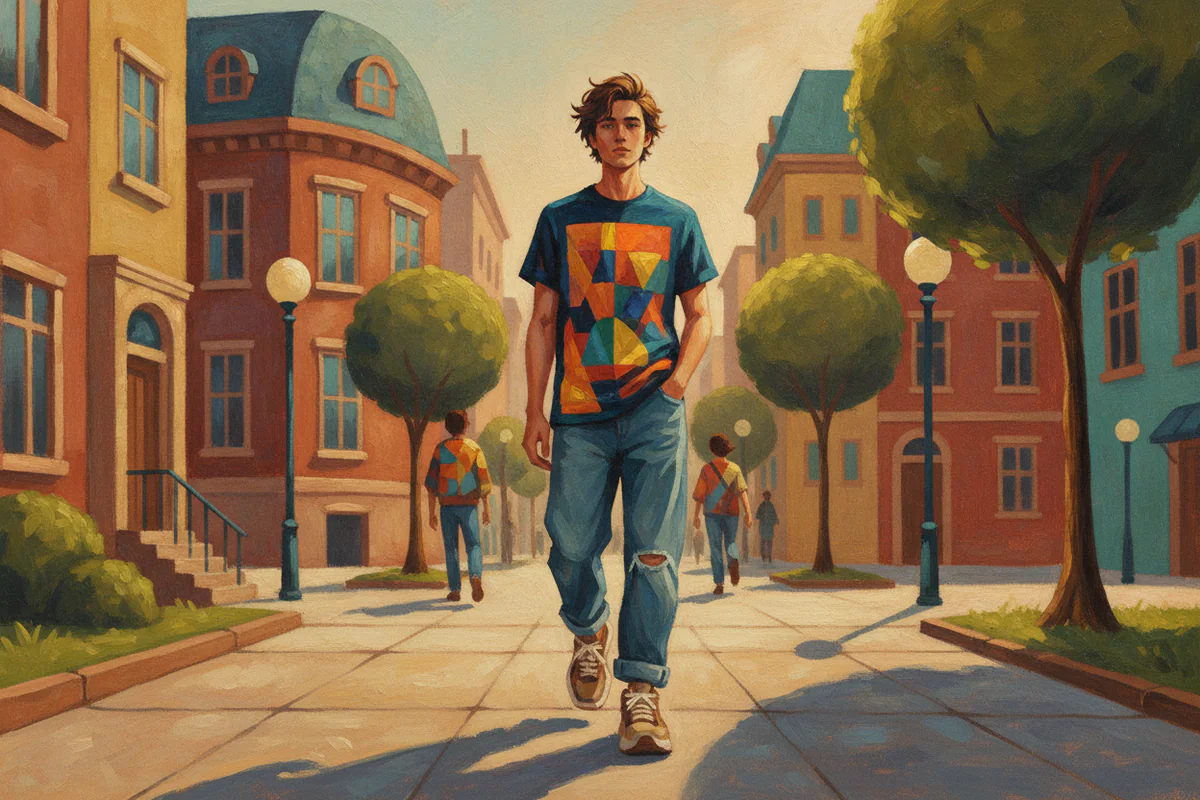
And fit has changed. The oversized silhouette that came back alongside the graphic tee revival is genuinely different from the boxy proportions of 2004. It's worn with more intention now - tucked half in, paired with something tailored, or sized up on purpose rather than just because that's what was available. The same shirt reads completely differently depending on this, which is worth knowing if you're trying to figure out why your actual 2004 Warped Tour tee doesn't quite look like what you're seeing on people today.
The thrift economy changed who this trend belongs to
One thing that genuinely separates this graphic tee moment from the original run is where people are getting them. In 2004, you bought a graphic tee at Hot Topic or at a concert or at the mall. The distribution was new and retail-driven. Now, a significant portion of the most-coveted pieces come through thrift stores, estate sales, Depop, and vintage resellers - which means the trend has a built-in scarcity and individuality that mass-market fashion can't easily replicate.
This has created a weird tension. Music posters and band merchandise from the same era have followed a parallel trajectory - objects that were disposable in their time are now treated as collectibles, partly because the culture that produced them doesn't exist in the same form anymore. The graphic tee and the vintage poster are doing similar cultural work: they're physical evidence of a specific aesthetic moment, and that specificity is exactly what makes them feel worth owning.
Anyway - the practical upshot is that the graphic tee comeback trend probably isn't going anywhere soon, because the underlying driver (nostalgia for a generation now in their mid-to-late 20s) hasn't peaked yet. But the more interesting shift is that it's stopped being about nostalgia at all for a lot of people wearing them. It's just become how some people dress - with intention, with a reference point that means something to them personally, and without much concern for whether it reads as ironic or sincere to anyone else. That, more than the trend cycle, is what makes it stick.