
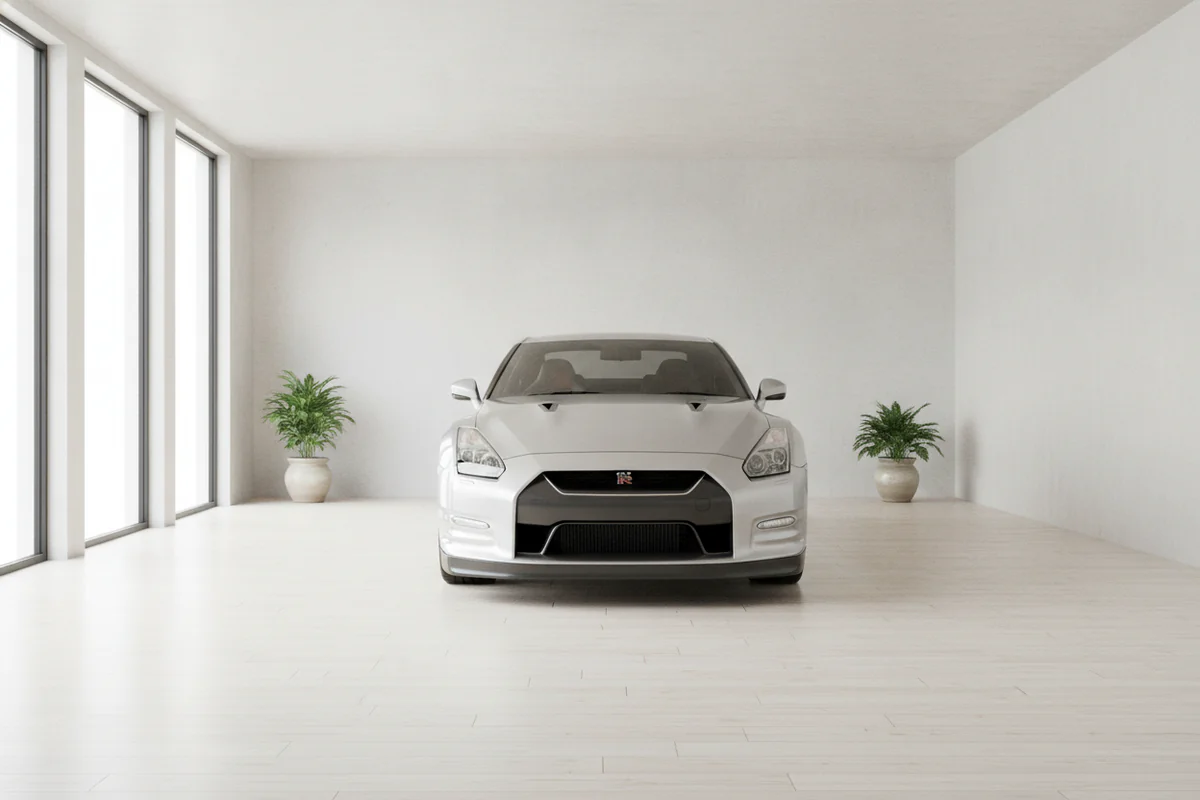
The name didn't come from Japan
Most people assume the Godzilla nickname was invented by Nissan, or by Japanese car culture, or at least emerged organically from some vague collective admiration. None of that is true. The name has a precise origin, a specific country, and a rough date. And the reason it stuck has everything to do with what the R32 GT-R actually did on a racetrack in 1989.
The short version: Australian motorsport journalists, watching a foreign car come in and absolutely dismantle the local competition, reached for the most fitting cultural metaphor they had. A giant from Japan, stomping through a city it had no business being in. The name Godzilla fit well enough that it never went away.
What the R32 was walking into
To understand why the nickname landed so hard, you have to understand the context. The Australian Touring Car Championship in the late 1980s was dominated by domestically-built machinery - Ford Sierras, Holden Commodores, cars with serious development budgets and years of local race-craft behind them. These were not slow cars. The Sierra RS500 in particular was a turbocharged monster running somewhere around 500 horsepower in race trim, and it had been winning races with some consistency.
Then Nissan showed up with the R32 GT-R for the 1990 ATCC season (the car had debuted in Japan in 1989, and testing and preparation had been underway through late 1989 into early 1990). The GT-R brought a twin-turbocharged 2.6-litre inline-six - the RB26DETT - and its ATTESA E-TS four-wheel-drive system, which at the time was genuinely unusual in circuit racing. The combination meant traction out of corners that the rear-wheel-drive competitors simply couldn't match, regardless of how much power they were making.
The GT-R won the ATCC title in 1990, then again in 1991 and 1992. It won 29 consecutive races at one stretch. The local press needed a word for what was happening, and "dominant" wasn't quite capturing it.
Where the word "Godzilla" first appeared in print
The credit generally goes to Australian motorsport journalist and commentator Rob Luck, writing in Wheels magazine around 1989-1990. Luck used the Godzilla comparison to describe the GT-R's arrival - a huge, unstoppable creature from Japan, arriving on foreign shores and causing destruction. Whether he was the first person to say it out loud in a press room is unknowable, but he's the one who put it in print in a way that spread.
The nickname caught on fast in Australian motoring press, then filtered back through international coverage of the ATCC, and eventually back to Japan itself, where Nissan's own marketing team would later lean into it quite deliberately. By the time the R35 generation launched in 2007, Nissan was essentially using Godzilla as an unofficial second name.
Why "Godzilla" specifically worked
There are a lot of nicknames in motorsport that make sense in context and then disappear. Godzilla didn't disappear. Part of the reason is that the metaphor was genuinely accurate in ways that went beyond just winning races.
Godzilla in the classic films isn't evil, exactly - it's a force that operates by its own logic, indifferent to the structures of the world it's moving through. The GT-R had something of that quality. It wasn't faster in a conventional way. It didn't have the most powerful engine in the field. What it had was a drivetrain and chassis setup that made the act of going fast through corners feel almost procedural. Mechanical grip where others had drama. Other cars slid; the GT-R just went around.
And it beat cars that cost considerably more - not just in the ATCC, but on the Nurburgring, in drag events, in road tests. The R32 was priced in Japan at roughly 4.5 million yen at launch, which translated to a competitive but not exotic price point. It was routinely embarrassing Porsches, BMWs, and purpose-built race cars that carried two or three times the development budget. That gap between cost and capability fed the mythology significantly.
The R34 years and the peak of the legend
By the R34 generation (1999-2002), the GT-R had become something larger than a car. The motorsport dominance had been followed by a decade of tuning culture building around the RB26 engine, which proved almost absurdly receptive to power modifications. Shops in Japan were running 800, 900, 1000 horsepower through platforms that still used the basic engine architecture. The GT-R had gone from a production car that happened to be competitive to a tuner's blank canvas that set records in events it had no business entering.
Paul Walker's R34 in the Fast and Furious series introduced the car to an audience that knew nothing about Australian touring cars or Nurburgring lap records. For a generation of car enthusiasts who grew up in the early 2000s, that silver R34 was the GT-R, and the Godzilla nickname was just part of its identity - received as mythology rather than earned history. Both things can be true at once. The mythology spread the name; the history justifies it.
What the R35 did with the name
The R35, launched in 2007, was a significant departure. Different architecture, dual-clutch gearbox, no direct mechanical connection to the RB26. Some GT-R traditionalists resisted it for exactly those reasons. But on pure performance terms it continued the pattern: a car priced around $70,000-80,000 at launch that ran lap times competitive with cars at three times the price. The GT-R ran a 7:29 at the Nurburgring in 2008, a genuinely serious time that drew comparisons to the Porsche 911 GT3 and Lamborghini Gallardo.
Nissan's marketing team - who by this point had no hesitation about using the nickname - leaned into the Godzilla framing in launch materials, dealer communications, and press documentation. The name had moved from journalist shorthand to brand asset.
If you're interested in the broader visual culture around the GT-R and Japanese performance cars, Nissan wall art and gifts covers a fair range of options for anyone who wants something on the wall beyond a generic poster.
Why the nickname has lasted 35 years
Nicknames that stick usually do so because they compress something true into a memorable shape. Godzilla works because it captures a specific and real quality: the GT-R arriving somewhere it theoretically doesn't belong, operating at a scale that's disproportionate to its origins, and leaving a trail of more expensive machinery behind it. That happened in Australia in 1990. It happened on the Nurburgring. It happened in tuner builds that made 1000 horsepower from a production engine architecture. The same story, repeated across thirty-five years of different generations and contexts.
The name Rob Luck reached for in an Australian press box wasn't just a clever line. It turned out to be an accurate description of something the car would keep doing.