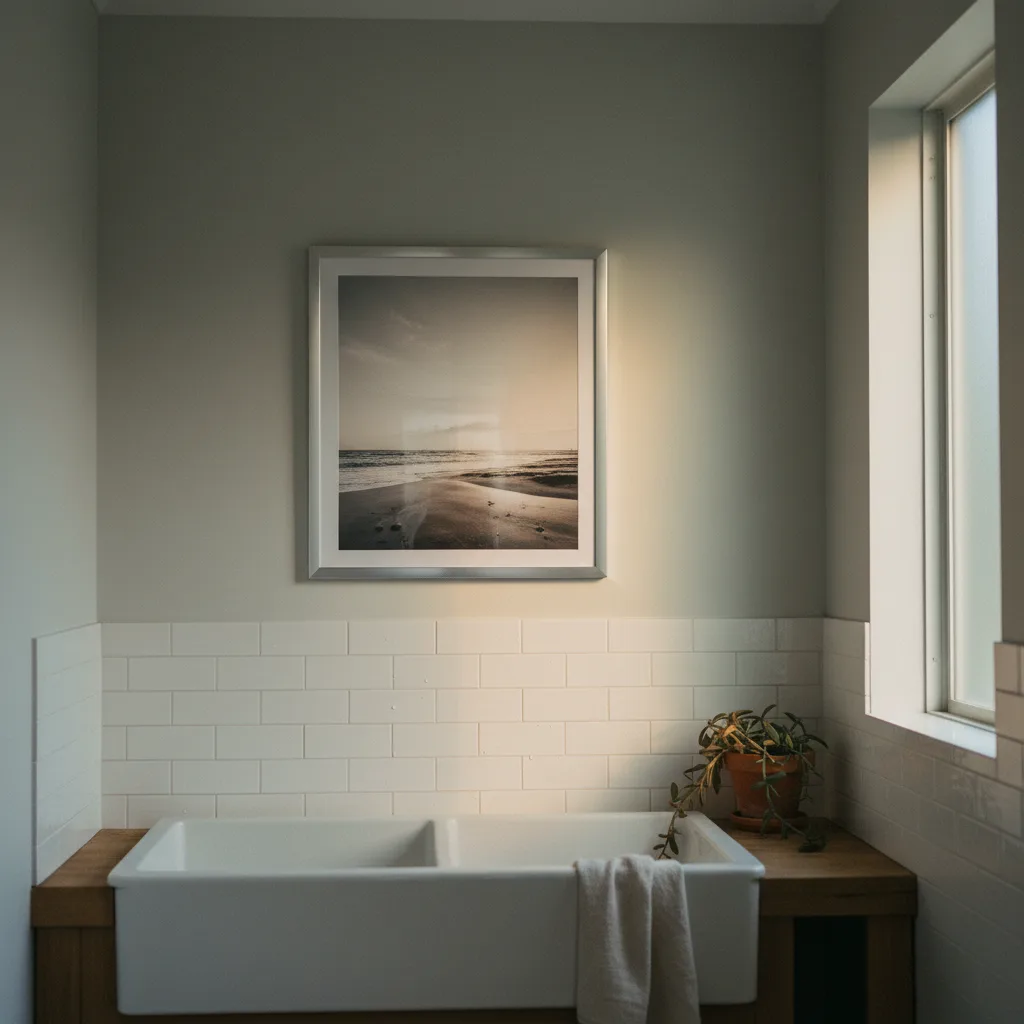
If you're shopping for wall art for a humid bathroom, the material question matters more than it does anywhere else in your home. Get it wrong and you'll be pulling a warped, bubbled poster off the wall inside six months. This isn't scare-mongering - paper and steam genuinely don't coexist, and even some canvas prints will let you down if the ventilation in your bathroom is bad.
Why humidity wrecks most standard prints
Paper absorbs moisture. That's just physics. A standard poster print - even a decent one - will start to wave and buckle in a steamy bathroom because the paper fibers expand unevenly as they pull in humidity. The edges usually go first. Then the ink starts to look dull, sometimes patchy. If there's any kind of MDF or cardboard backing involved, that'll warp too and push the whole thing out of shape.
Canvas is better, but not unconditionally. Stretched canvas on a wooden frame is still vulnerable if the wood soaks up enough moisture over time - it can bow, and the canvas itself can go slack. Rolled or gallery-wrapped canvas with a solid poly-coating holds up noticeably better than uncoated versions.
The one material that actually works in a humid bathroom
Metal prints. Aluminum panel printing specifically. The image is infused directly into the surface coating - there's no paper layer to absorb anything, no substrate that warps, no backing that rots. You can run a hot shower for twenty minutes and the print doesn't care. The surface wipes clean. It won't rust in normal bathroom conditions because the aluminum is coated, not bare.
The aesthetic is also genuinely different from canvas or paper - there's a slight sheen, almost a depth to the image, especially on lighter areas. Some people love it, some find it too modern. But for high-humidity rooms it's not really a competition. Metal wins on durability by a wide margin.
Check out the full wall art range if you want to see what's available across different formats and finishes.
Kitchens are a different problem
Kitchens aren't just humid - they're also greasy. Steam from cooking carries oil particles, and those settle on surfaces including your wall art. Canvas texture catches grease in a way that's basically impossible to clean without damaging the print. A sealed metal print or a high-gloss acrylic print can be wiped down with a damp cloth. That matters a lot if the print is anywhere near the stove or above the counter.
If you're set on canvas for a kitchen, hang it on a wall that doesn't face the cooking area directly. Above a breakfast table or on a far wall - fine. Directly beside the hob - honestly, don't.
Mudrooms and entryways
Mudrooms get overlooked in this conversation but they're actually rough on prints too. Temperature swings when the door opens and closes, damp coats and shoes, sometimes actual mud splatter. The key issue here is less sustained humidity and more repeated cycles of damp-dry-damp, which stresses materials differently.
Framed prints with glass work well here if the frame itself is metal or solid hardwood - not MDF, which swells and delaminates at the corners after a year or two of this treatment. Metal prints with no frame at all are also a solid choice because there's simply less to fail. Fewer components, fewer points of failure.
What about mugs and other non-wall options?
If you're decorating a bathroom or kitchen and you're not totally sold on wall art for the space, there are other ways to add personality. Printed mugs are an obvious one for kitchens - they live on the shelf, they're functional, and a good print on a mug is actually pretty durable. Not the same as wall art obviously, but worth mentioning if the humidity concern is putting you off committing to a large print.
The short version
For a humid bathroom or any high-moisture room: metal print first, sealed canvas second, standard paper poster never. For kitchens add grease-resistance to the list of requirements, which rules out canvas near cooking surfaces. For mudrooms, avoid MDF-backed frames entirely.
Browse the wall art categories and filter by what catches your eye - just keep the material question in the back of your head before you buy. It'll save you a replacement order in six months.