
There's a specific type of luxury car buyer who looks at a Mercedes S-Class and thinks: too much. Too much chrome, too many updates to the infotainment every three years, too many trips to the dealer. These buyers exist in larger numbers than the automotive press tends to acknowledge, and a lot of them end up in a Lexus.
Understanding why Lexus owners choose reliability as the cornerstone of their decision - rather than badge prestige or styling ambition - gets at something interesting about how a subset of affluent buyers actually think about cars.
The 1989 launch was a calculated bet
When Toyota introduced Lexus to North America in 1989 with the LS 400, the strategy was transparent to anyone paying attention: build a car that matched or beat Mercedes and BMW on objective quality metrics, sell it for less, and back it with a service experience that made the German dealers look indifferent. The LS 400 hit the market at around $35,000 when a comparable S-Class was pushing $70,000. Consumer Reports went fairly wild about it. J.D. Power went wild about it. Word spread.
What Toyota understood - and this is the part that gets forgotten - is that plenty of luxury buyers were already exhausted by the German ownership experience before Lexus even arrived. The prestige was real but so was the complexity, the cost of ownership, and the attitude at some dealerships. Lexus offered a different implicit promise: this car will not become your problem.
What "reliability" actually means to this buyer
It's worth being specific here because reliability in the luxury context means something more layered than "the engine starts every morning." For Lexus buyers, it tends to mean a few things bundled together.
First, total cost of ownership. A lot of Lexus owners are financially precise people - doctors, engineers, small business owners - who know very well that a $65,000 BMW 5 Series can cost $3,000-$5,000 a year more to maintain than a comparably priced ES or IS. Over five years, that gap compounds. They're buying a luxury car, not a luxury maintenance schedule.
Second, predictability. There's a temperament thing happening here. Some buyers want the car to be the exciting part of their day. Others want the car to be invisible - to start, to be comfortable, to arrive, to not generate phone calls from service advisors. Lexus attracts the second type in disproportionate numbers.
Third, and maybe most interesting, resale stability. Lexus vehicles hold value well. The RX in particular has had resale figures that make comparable European SUVs look volatile. For a buyer who plans to trade in four years, that matters.
The understatement thing is real
Some Lexus owners - not all, but a meaningful portion - actively prefer that the car not announce itself. This is particularly true of the older LS sedan buyer, the person who could absolutely afford an AMG S-Class and prefers not to drive one. There's a certain confidence in that choice that doesn't get much cultural credit because car media is largely built around enthusiasm for the flashy thing.
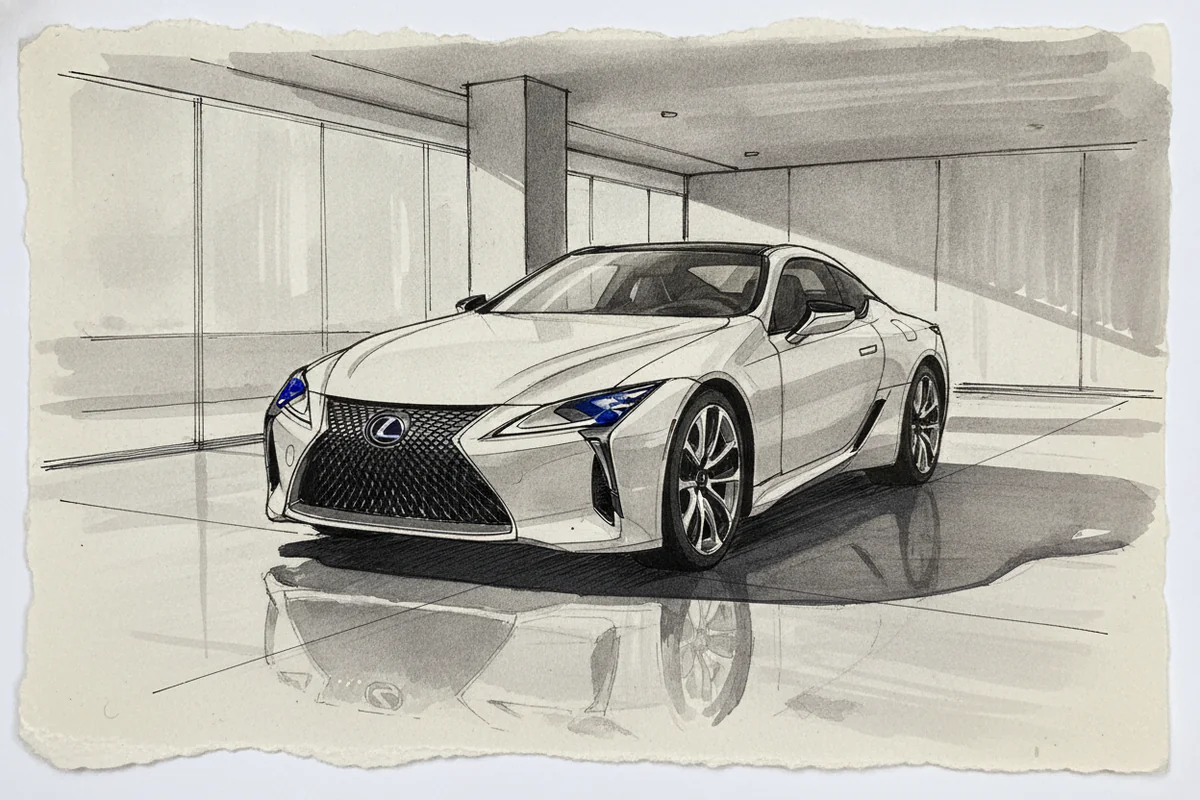
The spindle grille, which Lexus introduced around 2012, complicated this a bit. That grille is not subtle. There's been genuine grumbling among longtime Lexus loyalists who felt the brand started chasing German expressiveness - bigger, more aggressive, more styled. Whether that worked commercially is debatable. What's less debatable is that the older understated LS and GS body language had its own distinct appeal that didn't need to prove anything to anyone pulling up alongside it at a light.
Anyway - the ownership culture that developed around Lexus skews toward people who've already done the showy thing, or who never wanted it to begin with. These owners tend to keep their cars longer, which is itself a data point about satisfaction. A Lexus IS or RX with 180,000 miles on the original engine is not a remarkable story; it's a Tuesday.
How this compares to the German brand experience
BMW and Mercedes make genuinely excellent cars, and I don't think most Lexus buyers would deny that. The driving dynamics at the performance end of those lineups are legitimately harder to match. But the full ownership experience includes the software subscriptions, the expensive brake jobs, the timing chain issues on certain engines, and the general sense that these cars are engineered to a budget that assumes aggressive dealer service intervals.
Lexus dealerships have consistently ranked near the top of customer satisfaction surveys for years - not because they have nicer lobbies, but because the cars don't need to visit as often. That's a structural advantage, and buyers who've owned both brands tend to notice it sharply.
There's also a community aspect to this that sometimes gets overlooked. Lexus owners who get deeply into the brand - who join forums, attend meets, modify their IS or RC - aren't chasing the same identity signals as enthusiasts who wear their BMW roundel like a credential. The Lexus wall art and gifts market reflects that understated loyalty: it's appreciation without performance, which describes a lot of these owners pretty accurately.
The hybrid play changed the equation further
Lexus leaned into hybrid powertrains earlier than any other luxury brand, and the RX 450h in particular became a kind of proof of concept for the whole brand philosophy. Here was a luxury SUV that was quieter than its competitors, more fuel efficient, and statistically more reliable - and it cost roughly what a loaded non-hybrid European alternative would cost. For buyers who were already inclined toward the rational choice, the hybrid argument made Lexus almost compellingly obvious.
The long-term reliability data on Lexus hybrid systems has also been, frankly, impressive. Taxi fleets in some cities ran RX 400h vehicles past 300,000 miles on the original hybrid battery. That data circulates in ownership communities and reinforces the buying decision years after the fact.
What loyalty actually looks like
Lexus has one of the highest owner loyalty rates in the luxury segment - consistently around 50% or higher in surveys asking whether owners would buy the brand again. That's not just satisfaction with the current car; it's trust that accumulated over multiple ownership cycles. The buyer who bought an ES in 2004, had a good experience, moved to a GX in 2011, had another good experience, and is now shopping an LS - that's the Lexus customer in its clearest form.
The rational-buyer reputation that Lexus built in those first ten years has proven sticky precisely because it was earned rather than marketed. You can run ads about reliability all you want, but the reputation only holds if the actual ownership experience confirms it. For most Lexus owners, it has. That's a harder thing to build than a striking grille, and probably more durable.