
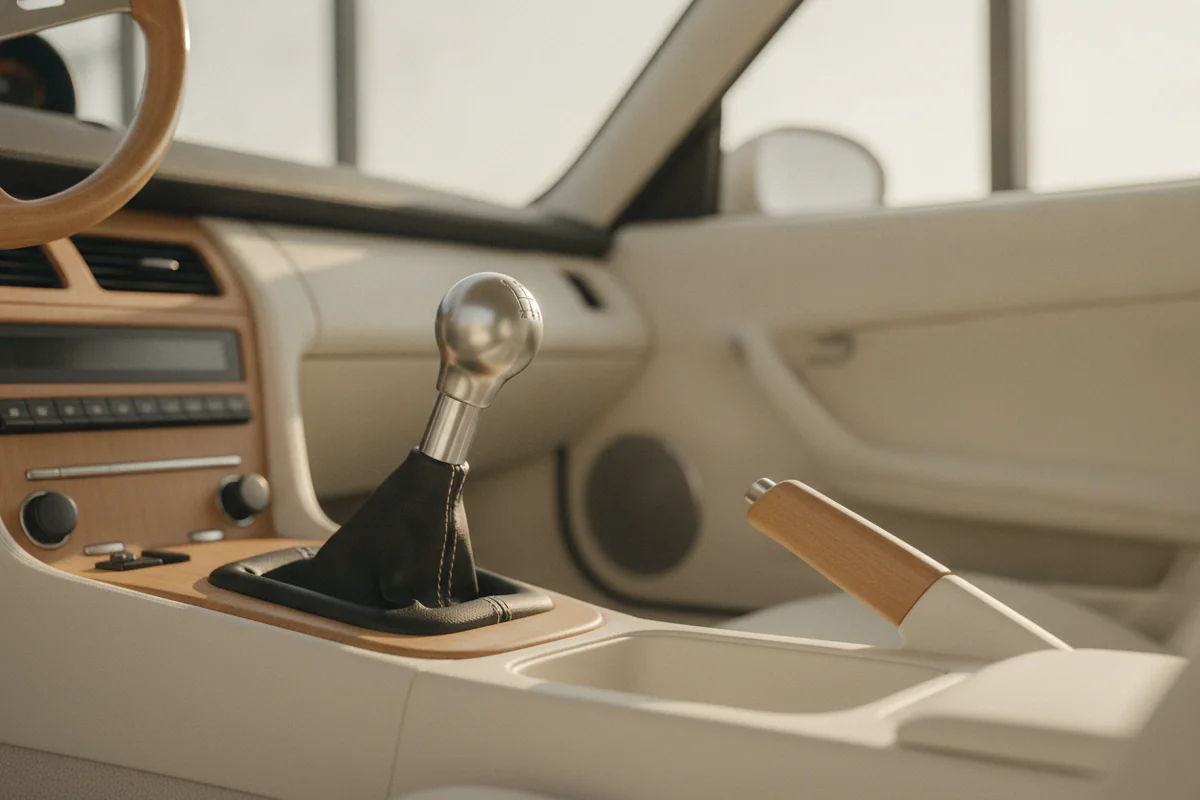
A modern eight-speed automatic will beat a manual version of the same car down a quarter mile every single time. The dual-clutch setups in a Porsche 911 or a Ferrari can shift in under 100 milliseconds - faster than a human blink, faster than any left foot and right hand will ever manage. The data is not close. And yet manual transmission enthusiast culture is not shrinking. In some corners it is quietly getting louder.
So what is actually going on here?
The performance argument was never really the point
Somewhere in the last decade, enthusiasts more or less conceded the performance debate. Automatics won. Fine. But the people still cross-shopping manuals were never primarily optimizing for lap times - they were optimizing for something harder to measure, which is how the car feels to drive when nobody is timing you.
A manual gearbox puts the driver in a continuous feedback loop with the car. You feel the engine load through the clutch pedal. You hear the revs climb and decide when to cut them. A badly timed downshift punishes you with a lurch; a well-executed heel-and-toe feels, frankly, good in a way that is almost embarrassing to describe to someone who has never tried it. The automatic just... does it. Correctly. Every time. Which is great, except that "correctly every time" removes the variable that makes driving feel like something you are doing rather than something happening around you.
This is the core of it. Manual transmission enthusiast culture is not nostalgia for slower gear changes. It is a preference for agency over optimization.
The skill accumulation thing is real
There is a specific satisfaction that comes from getting better at something physical and mechanical. Learning to drive a manual is awkward and mildly humiliating at first - stalling at a green light, rolling back on a hill, the particular horror of a hill start in traffic - and then gradually it becomes automatic in the real sense, meaning your body just does it. After that, you start actually driving the gearbox rather than just operating it.
That skill accumulation matters to people. It is the same reason some cyclists insist on riding without electronic shifting, or why some photographers shoot on manual exposure even though the camera's metering is almost always smarter. You get a different relationship to the activity when you are responsible for more of the decisions, including the bad ones.
And practically speaking - a driver who can work a manual competently has a wider range of cars available to them, globally. Rent a car in most of Europe and the default is still a manual. Track days often involve older cars. Road trips through mountain passes in something old and European become a different kind of experience than the same route in a CVT-equipped crossover.
What the community actually looks like now
Manual transmission enthusiast culture in 2024 is not one thing. There are the purists who will not consider a car without three pedals regardless of what it is - they are buying a Honda Civic Si or a Mazda MX-5 and they are perfectly happy about it. Then there are the performance crowd who specifically hunt down the remaining manual options in genuinely fast cars: the Porsche 911 GT3 still offers a six-speed manual, and buyers choose it knowing the PDK is quicker, paying a premium for the slower option. BMW's M2 manual outsells expectations. Toyota brought back the Supra with a manual after enough noise from buyers.
There is also a growing overlap with the resto-mod and vintage car world - people who are building or restoring older cars and treating the manual gearbox as a given, part of the whole point. Forums, subreddits, local meets, weekend drives that go nowhere in particular. It is a genuinely social hobby, and the shared language tends to center on cars with three pedals.
One angle that does not get talked about enough: driving a manual in city traffic is, for a lot of people, less fatiguing, not more. You are engaged. There is something to do. Stop-start traffic in an automatic has a particular deadening quality - you are just... sitting there, pressing a pedal occasionally. In a manual you are at least doing something with your hands and feet. Some people find that easier to tolerate, not harder. I do, anyway.
Manufacturers are paying attention, slowly
For about fifteen years the industry narrative was that manuals were dying and there was nothing to be done about it. Sales numbers in the US dropped from around 35% of new cars in the mid-1980s to under 2% by the early 2020s, which looks like a collapse. But the floor has not disappeared the way people predicted. A small but stable slice of the market continues to specifically request the manual option, and some manufacturers have noticed that these buyers are disproportionately engaged - they read about cars, they go to track days, they are the people who generate the word-of-mouth that car brands actually want.
Mazda has been the most consistent about this. The MX-5 Miata has offered a manual since 1989 and Mazda has explicitly said they plan to keep it. Car posters of the original NA Miata outsell a lot of newer models in the enthusiast print space, which tells you something about how that car sits in the culture. Some things accumulate meaning over time rather than losing it.
Other manufacturers dip in and out. Honda nearly killed the manual Civic Type R before enough noise kept it alive. Ford still offers a manual Mustang. The pattern is that the halo cars, the ones that are supposed to signal a brand's performance credibility, tend to hold onto the manual option longest, because the buyers of those cars are exactly the audience that cares.
The irreducible thing
Ultimately there is something slightly irrational about all of this, and the people in this culture know it. You are choosing a transmission that will lose a drag race, that requires more effort in traffic, that not everyone in your household can drive, that narrows your used car options. You know this going in.
But cars have always carried more weight than their specifications suggest. The choice to drive a manual in 2024 is a small, concrete act of preference over convenience - a statement that how something feels to do is worth something, even when it is not the fastest or the most efficient way to do it. That instinct is not going away. And as long as there are people who feel it, there will be manufacturers willing to build three-pedal cars for them, even if the lineup keeps getting smaller.
The manual transmission is not dying. It is becoming more intentional.