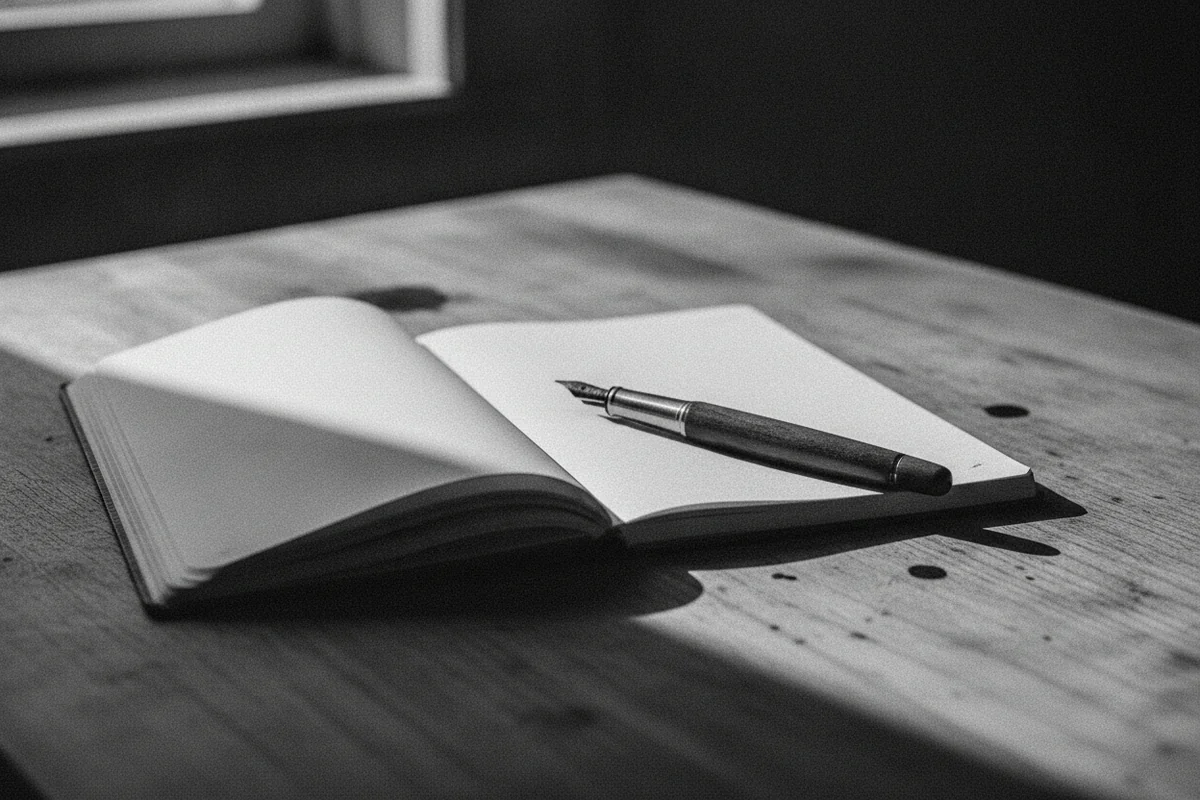
Somewhere between the fifteenth browser tab and the third "quick" Slack message of the morning, a lot of people are quietly closing the laptop and picking up a notebook. Not a note-taking app. An actual paper notebook, with a pen that sometimes bleeds through the page. The physical notebooks comeback trend has been building for a few years now, and at this point it's hard to dismiss as nostalgia or aesthetic posturing - there's something more practical going on.
Screen fatigue is not a myth
The average person in a desk job spends somewhere north of seven hours a day looking at screens. That figure keeps climbing. And somewhere around hour five or six, the brain starts doing something interesting: it stops absorbing. You're technically reading, technically processing, but the retention is thin. Researchers studying "digital cognitive fatigue" have been saying this for years - screens demand a kind of continuous low-level attention management that paper simply doesn't.
Writing by hand is slower. People tend to treat that as a flaw. But slower, in this context, means your brain is processing ideas rather than just transferring them. Studies comparing note-taking methods consistently find that handwritten notes produce better comprehension, even when the typed notes are more complete word-for-word. The friction is the point.
And beyond the cognitive science, there's just the physical relief of looking at something that isn't backlit. A notebook doesn't notify you. It doesn't refresh. You open it, and it is exactly where you left off.
The slow living connection
The physical notebooks comeback trend didn't arrive in isolation. It showed up alongside sourdough starters, vinyl records, film cameras, and a broader cultural conversation about what it means to actually experience something versus document it. The "slow living" label gets applied loosely, sometimes cynically, but the underlying impulse is real: people are looking for activities that have a defined end, that produce something tangible, and that don't require an internet connection.
Journaling fits that shape almost perfectly. You sit down, you write for twenty minutes, you close the book. The session is over. There's no feed to scroll afterward, no algorithm deciding what you should write about next. For a lot of people, that containment is the whole appeal.
Worth noting: the demographic driving a lot of this isn't who you'd expect. Gen Z - the generation supposedly glued to their phones - is one of the bigger forces behind journal and stationery sales growth over the last three years. Retailers like Leuchtturm1917 and Appointed have reported significant increases in younger buyers. There's apparently an appetite for something that exists entirely offline, and it's not coming primarily from people who remember life before smartphones.
What people are actually using notebooks for
The use cases have diversified well past "diary." Bullet journaling (the structured productivity system developed by Ryder Carroll) turned notebooks into planning tools that rival any app, with the added advantage that you design the system yourself rather than conforming to someone else's template. Sketch journaling, morning pages, gratitude logs, reading journals, travel logs - the paper notebook has become a fairly flexible platform.
Some of this variety is being driven by the visual culture around journaling. A quick search on YouTube or Pinterest surfaces millions of results: spreads, layouts, handwriting styles, washi tape techniques. It's a rabbit hole, honestly. But the effect is that journaling has built a genuine community around it, which sustains interest in a way that purely private practices often don't.
There's also a growing overlap with the home decor angle. A well-made notebook on a desk or shelf signals something about the person who owns it - that they read, that they reflect, that they pay attention to material quality. That might sound like overthinking a stationery purchase, but it's worth acknowledging that the objects we surround ourselves with do influence how we feel in a space. A printed piece of art on the wall works the same way - it reflects something back at you, sets a mood. Art prints for your workspace and a decent notebook on the desk are doing related work: making the space feel intentional rather than provisional.
The app alternatives never quite delivered
Every few months, a new note-taking app launches promising to be the last one you'll ever need. Notion, Obsidian, Roam Research, Bear, Apple Notes, Evernote (remember Evernote's better years?) - they're all genuinely capable tools. But they also share a problem: they're surrounded by everything else you use a computer for. Switching to your note-taking app means navigating past the email, the browser, the chat application. The context switch is never quite clean.
Paper doesn't have that problem. The notebook is a single-purpose object. You pick it up and it is already in focus. There's no loading screen, no update to install, no cloud sync to wait on. That sounds like a limitation, and technically it is - but it's a limitation that a lot of people have come to appreciate.
And there's something to be said for permanence. Handwritten notes from ten years ago are still readable. Apps get deprecated, file formats change, companies get acquired and shut down. A notebook from 1987 opens fine.
So where does this go?
The physical notebooks comeback trend isn't going to displace digital tools - that's not the argument. Most people who journal by hand also use Notion for work, keep their calendar on their phone, and read on a Kindle. It's not either/or. What seems to be happening is that people are getting more deliberate about which tasks go where, and reflective or creative thinking is increasingly landing in the analog column.
The market data backs this up. Global sales of premium notebooks have grown steadily since 2020, and stationery as a category has outperformed general retail in several major markets. That's a trend with some staying power behind it.
If you've been meaning to start a journaling habit and keep defaulting to an app that you then ignore, it might be worth just buying a notebook. A specific one, with decent paper, that you keep somewhere visible. The bar for starting is lower than you'd think - there's no setup, no account, no tutorial. You just open it and write whatever seems worth writing down. That's the whole system.