If you have spent more than ten minutes trying to order wall art online, you have probably hit the same wall: the same image is available as a canvas, a framed print, and a poster, at three different price points, and nothing on the page really explains what you are actually getting. So here is a straight comparison of all three formats - what they are physically, what they cost, and how they actually look once they are up.
What each format actually is
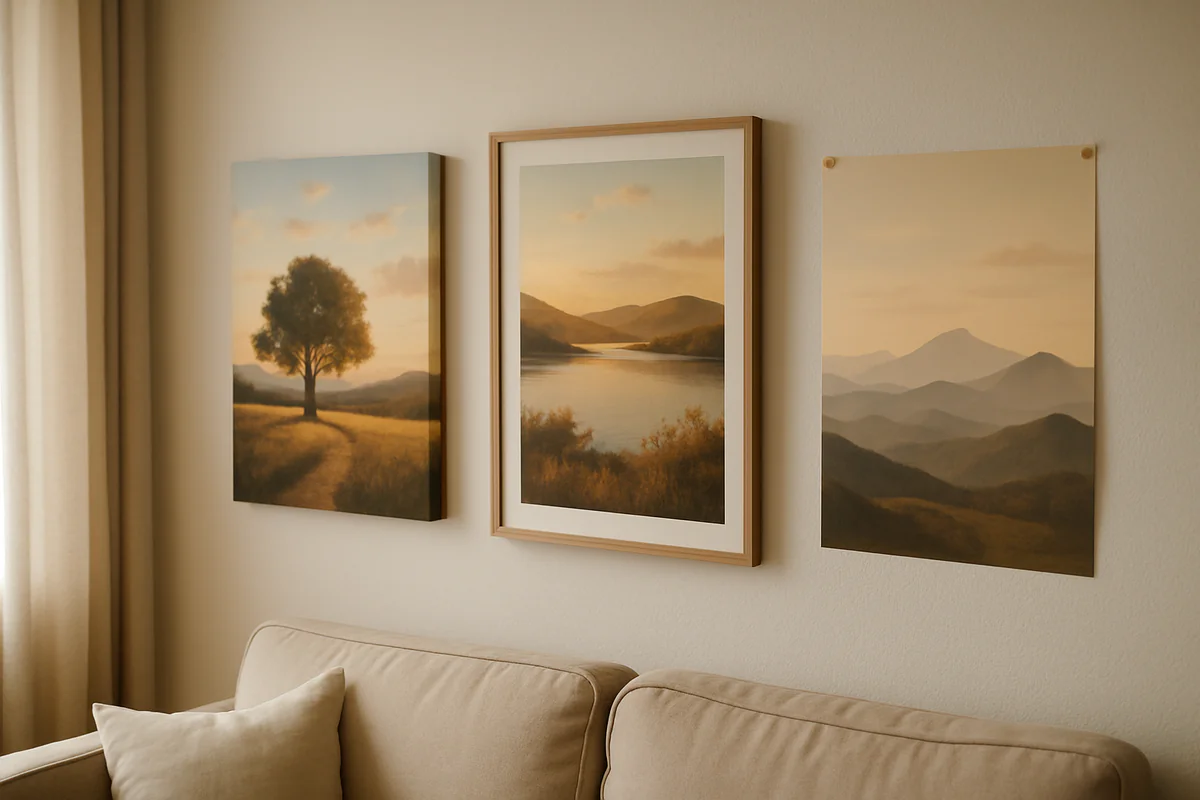
Canvas with a wood frame means the image is printed directly onto canvas fabric, then stretched over a wooden frame so the whole thing holds its shape without any additional framing. It arrives ready to hang. The sides of the frame are usually visible, which gives it a bit of depth - it sits off the wall by an inch or so rather than lying flat against it. At EnjoyPoster the canvas option starts at $69 for a 20x16 inch print, and sizes go up to 40x30.
A framed poster is a paper print behind glass, with a physical frame around it - the kind of thing you would expect to see in an office or a gallery anteroom. The glass protects the print from dust and humidity, and the frame gives it a formal, finished look straight out of the box. It costs more than unframed, for obvious reasons.
An unframed poster is just the print itself on paper. No glass, no frame, no stretcher bars. It needs something to hang it - either you frame it yourself, or you use poster strips, or you clip it. It is the cheapest entry point, with prints starting at $29, and it gives you the most control over how the final thing looks because you pick the frame.
The price gap is real, and it compounds
The unframed poster is where the number is smallest, but if you plan to frame it yourself, add the cost of a decent frame - a good one for a mid-size print runs $25 to $60 at most home stores, sometimes more. By the time you are done, a $29 poster can easily cost as much as the framed version, without the convenience of it arriving ready to go. That is not an argument against unframed posters - sometimes you genuinely want a specific frame that nobody else sells - it is just worth doing the math before you assume it is the budget option.
Canvas sits at the top of the price range per piece, but there is no additional hardware to buy. It arrives with hanging hardware already attached in most cases, and because there is no glass, there is no glare either. In a room with a lot of natural light, that matters more than you might expect.
How they read on a wall
Canvas has texture. The weave of the fabric is visible up close, which gives the image a slightly painterly quality even when the source is a photograph. From across a room it looks substantial - the depth of the wood frame makes it look like an object rather than a decoration applied to the wall. It works well in living rooms and bedrooms where you want something that feels considered rather than just filled-in.
A framed poster reads as intentional in a different way. The glass surface gives it a flat, clean presentation, and depending on the frame material - wood, metal, whether it has a mat border - it can look very polished or quite minimal. It suits spaces where things are already fairly structured: a home office, a hallway, a dining room with other framed pieces. One thing to be aware of is reflection - glass catches light, and depending on where you hang it relative to windows or lamps, you can get glare that partly obscures the image.
An unframed poster, assuming you do frame it, looks however you want it to look. That is the real argument for it. You can pair a vintage travel print with a thin black metal frame and it reads modern. The same print in a wide white-matted wood frame reads traditional. You have full control, which is genuinely useful if you have a specific aesthetic you are working toward and the ready-made options never quite match it.
Unframed and stuck directly to a wall with tape or strips looks fine in some contexts - a rental where you cannot make holes, a teenager's room, a studio - and looks unfinished in others. Worth being honest with yourself about which situation you are actually in.
Durability: what holds up over time
Canvas is the most durable of the three by a reasonable margin. There is no paper to yellow, no glass to crack or fog, and the canvas itself does not fade quickly if the printer uses quality inks. EnjoyPoster uses eco inks, which helps with longevity. A canvas print handled reasonably well should look the same in ten years.
Framed prints with glass are well-protected from humidity and handling, but the glass is a vulnerability - move it carelessly and it can crack. The paper inside is stable as long as the seal is good. UV-protective glass makes a meaningful difference if the piece is going somewhere with direct sun, and most standard frames do not include it.
An unframed poster is the most vulnerable. Paper is sensitive to humidity, and without glass it is exposed to whatever the room throws at it. How much that matters depends on where you are hanging it - a dry interior wall with no direct sun is fine; a bathroom or a kitchen is pushing it.
So which one should you actually buy?
If you want something that goes straight up on the wall, looks complete, and you are not planning to move in six months: canvas. The price is higher upfront but there is nothing else to buy or do.
If you want a more formal look, or you are matching other framed pieces in a room: the framed poster format is built for exactly that. Just think about where the light hits before you commit to placement.
If you have a strong opinion about frames and want the image to work within a specific one you already own or plan to buy: unframed poster is the right call. Also the right call if you genuinely just want to try a print in a space before committing more money to it.
All three formats are available in sizes from 16x12 up to 40x30, so the size decision is separate from the format decision - you are not trading off one for the other. If you are ready to start looking at specific images rather than thinking about formats, browse the full wall art collection and filter from there. Shipping is free on orders over $30, which most single prints will clear without any trouble.