The hoodie I ruined and what I learned from it
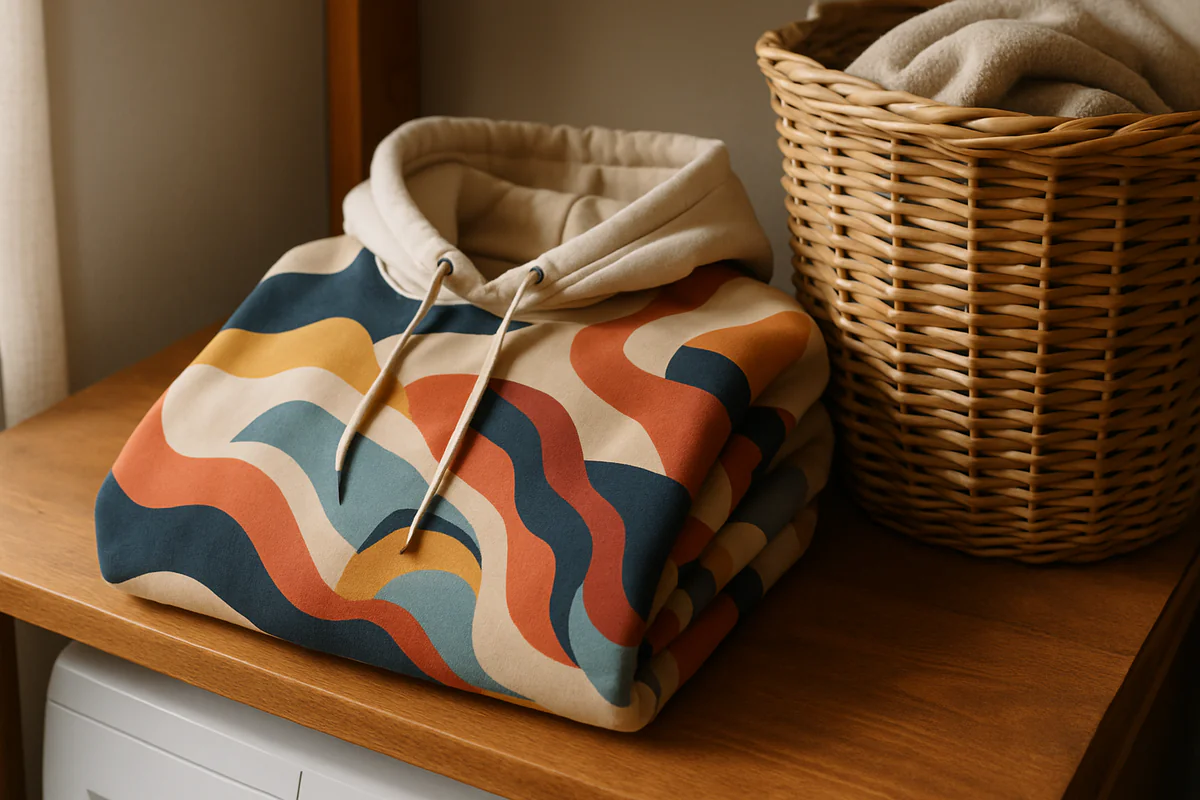
A few years ago I had a screen-printed hoodie I genuinely loved - a big front graphic, good thick cotton, the kind of thing you reach for every other day through autumn. After about eight months of regular washing it looked like the print had aged fifteen years. Hairline cracks across the whole image, edges lifting, colour gone chalky. The hoodie itself was fine. The design was destroyed.
I was washing it completely wrong. Turns out most people are, because nobody really explains this stuff when you buy something.
Turn it inside out - every single time
This is the single highest-impact thing you can do, and it costs zero effort. The drum of a washing machine is not gentle. Your hoodie is tumbling around in there, rubbing against zips, buttons on other clothes, and the drum surface itself. That friction directly abrades the print surface over dozens of washes.
Turning it inside out puts the fabric against all that friction instead of the graphic. The print still gets clean - detergent gets in there fine - but it stops taking the physical punishment. Do this before every wash, no exceptions.
Cold water, always
Heat is what accelerates cracking more than almost anything else. Hot or even warm water softens the ink layer repeatedly over time, which causes it to lose adhesion and eventually crack as it cools and contracts again. Cold wash - 30°C or lower - keeps the ink stable.
Practically speaking, cold water cleans hoodies just fine. You're washing cotton knitwear with a bit of sweat and general life on it, not heavily soiled workwear. A 30°C cycle with a normal detergent is more than adequate.
Skip fabric softener
This one surprised me when I first heard it. Fabric softener works by coating fibres with a lubricating layer, which makes the fabric feel softer and reduces static. The problem is that coating doesn't only stick to the fabric fibres - it also bonds to the print surface, and over repeated washes it gradually breaks down the adhesion between the ink and the fabric. You end up with a print that looks slightly greasy, then starts to peel.
If you want a softer hoodie, half a cup of white vinegar in the rinse cycle does something similar to fabric softener on cotton without the adhesion issue. Sounds weird, works fine, no your hoodie won't smell like vinegar once it dries.
The dryer is where prints go to die
High heat in a tumble dryer is probably the number one cause of cracked graphic prints. The heat causes the ink to expand and contract repeatedly through the drying cycle, and eventually the ink layer can't keep up with that movement. You'll notice fine cracks starting from the edges of the graphic first - that's the stress fracture pattern of heat damage.
If you must use a dryer, use the lowest heat setting and take the hoodie out while it's still slightly damp, then lay it flat or hang it to finish. Better option: hang dry from the start. A hoodie laid flat on a drying rack or hung on a wide hanger is dry in a few hours in most conditions and the print will outlast anything that's been through a hot dryer cycle repeatedly.
Never iron directly over the print
An iron on even a medium setting will melt, flatten, and warp whatever ink is under it. If you need to iron the hoodie fabric - and honestly most hoodies don't really need it - work around the print. Iron the sleeves, the shoulders, the back. If you need to go near the graphic for some reason, put a thin cotton cloth between the iron and the print and keep the iron moving.
Same goes for steam from above. A garment steamer pointed directly at a print for more than a second or two is going to cause problems with some print types, especially DTG.
Screen print vs DTG - they're not identical in the wash
Most printed hoodies are made with one of two methods: traditional screen printing, or DTG (direct-to-garment) printing. They behave a bit differently and it's worth knowing which one you have.
Screen printing lays down thicker layers of ink on top of the fabric. When you run a finger across a screen-printed graphic you can usually feel the raised texture. This type is quite durable if you treat it well, but the thickness of the ink layer is exactly what causes those dramatic cracks when it's mistreated with heat - the ink layer is rigid enough to fracture cleanly.
DTG printing bonds ink directly into the fibres of the fabric rather than sitting on top. It produces softer-feeling prints with finer detail and gradients you can't easily achieve with screens. DTG prints tend to fade more gradually rather than cracking dramatically, but they're more sensitive to fabric softener and high-heat washing than screen prints are. They can also look slightly faded after the first wash if you don't wash cold - there's a normal initial "cure" wash effect, but beyond that they're stable if you treat them right.
Both types benefit from exactly the same care approach: inside out, cold, no softener, low heat or air dry. DTG just has slightly less margin for error on the heat and chemical side.
A quick wash checklist
- Turn inside out before every wash
- Cold water, 30°C or lower
- Normal detergent, no fabric softener
- Gentle cycle if the machine has one
- Air dry, or dryer on lowest heat only
- Never iron directly over the graphic
- Wash with similar colours to avoid anything bleeding onto the print in cold water
What to do if cracking has already started
Honestly, once a print starts cracking it doesn't recover - there's no product or technique that reverses ink adhesion failure. But you can slow it down significantly. Switch to cold washing, stop using the dryer, and the remaining intact sections of the print will hold on a lot longer than if you keep doing what caused the cracking in the first place. Sometimes a hoodie with a slightly cracked graphic still looks fine in wear; the damage only really shows under close inspection or flat light.
And if the hoodie itself is still good but the print is genuinely gone, that's just a plain hoodie now. Wear it to the gym. Anyway -
If you're in the market for a replacement, printed hoodies worth actually taking care of are the ones where the base garment is good enough to be worth the effort. Cheap blanks are fine until the first wash ruins the print and you realise the fabric wasn't worth saving either. Quality matters on both sides of the equation.
The actual care rules are simple. The real issue is that most of us just throw clothes in the wash without thinking about them, which is fine for plain cotton but not for anything with a graphic. Five seconds of habit - flip it inside out, select cold - is the difference between a print that holds up for years and one that looks wrecked by spring.