
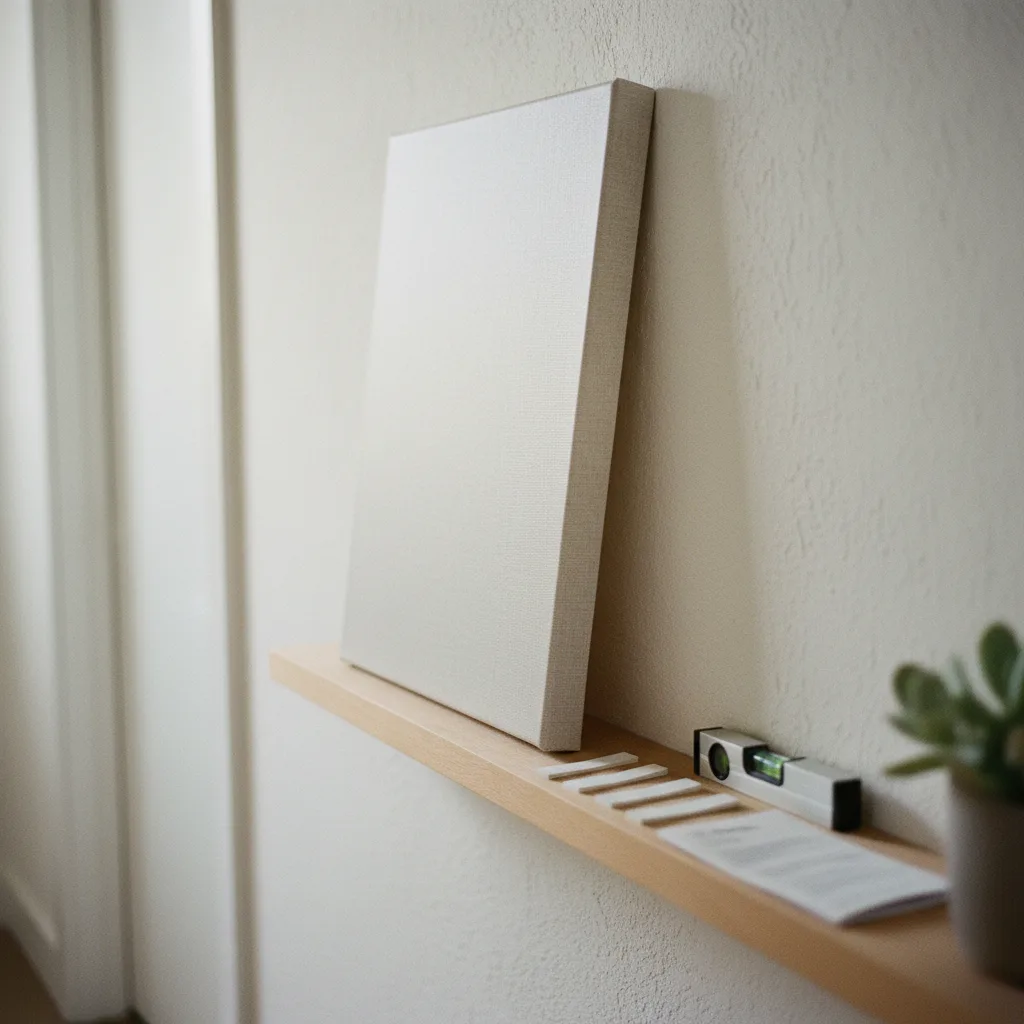
If you're renting, you already know the anxiety - you buy a print you love, it arrives, and then you stand there holding it wondering how to hang a canvas without nails and still have it stay up past Wednesday. Good news: there are real options. Bad news: not all of them are honest about their limits, so let's go through what actually works.
Command strips - the obvious answer, with caveats
3M Command picture-hanging strips are the first thing everyone reaches for, and for canvases under about 2 kg (roughly 4 lbs) on a standard drywall surface, they're genuinely fine. The catch is weight. The packaging is optimistic. A large canvas print - anything above 60x90 cm - starts pushing past what a standard pair of strips can reliably hold, especially if your walls have any texture or the humidity swings seasonally. Use the heavy-duty version, follow the bonding instructions (press and hold for 30 seconds, wait an hour before loading), and check the weight of your specific canvas. Canvas-wrapped prints are lighter than you'd expect; metal prints are not.
Adhesive hooks for lighter framed prints
If your canvas has a wire or sawtooth hanger on the back, a single adhesive hook can work well - again, within weight limits. The 3M Command large hooks hold around 3.6 kg, which covers most standard poster-size canvas prints. One thing people skip: clean the wall with isopropyl alcohol before sticking anything. Dust and paint residue are why adhesive fails. Takes 20 seconds, actually matters.
Velcro mounting tape
Heavy-duty Velcro strips sold for mounting (not the sewing kind) are underrated for canvases. They distribute weight across a wider surface than a small strip, which helps with anything rectangular and flat-backed. Works especially well for canvas prints that sit flush against the wall. The downside is removal - the adhesive side sometimes takes paint with it on older walls, so test a small patch first if you're worried about it.
Picture-hanging strips designed for no-nail hanging
Beyond Command, there are a few competing brands - Gorilla Mounting Tape and Scotch-brand picture hangers among them - and they vary more than you'd think. Gorilla tape is aggressive; good for heavier pieces but will absolutely pull paint if you don't remove it carefully (score around the edges with a credit card, pull parallel to the wall, not outward). Scotch's clear mounting squares are gentler and fine for anything under 1 kg. Know what you're hanging before you pick one.
Leaning - genuinely underused
People act like leaning a canvas against the wall is giving up. It's not. A large-format wall art print leaned against a shelf, a mantle, or directly on the floor reads intentional if the size is right. Anything above 70 cm tall works. You can layer prints this way too - a bigger canvas behind a smaller one on a shelf looks like something out of a design shoot, and it took zero tools. Renters especially should think about this more.
How to hang a canvas without nails on awkward surfaces
Brick, tile, and textured plaster walls are where adhesive solutions start losing. Textured walls reduce contact area dramatically - strips rated for 4 kg on smooth drywall might hold 1 kg on a lightly textured surface. For brick specifically, your options are limited without drilling. The most honest answer: use a picture rail if the room has one (clip-on hooks, no damage), or lean the piece. Some renters use furniture placement to create display surfaces - a narrow console table or a bookshelf positioned to hold a canvas isn't a compromise, it's just a different kind of installation.
Whatever method you go with, match it to the actual weight of what you're hanging. Check the product page - canvas prints on EnjoyPoster list dimensions and most list approximate weights. If you're not sure, err toward the heavier-rated option. A fallen canvas at 3am is a bad night, and a deposit deduction is a worse one.
And honestly, if you're still picking the print itself - a wall art canvas that's 40x60 cm or smaller is going to give you more flexibility with every method listed above. Bigger isn't always better when you're renting.