Maximalist wall art ideas are everywhere right now, and most of the advice is useless - 'mix patterns boldly!' 'layer textures!' - without ever explaining what stops a packed wall from looking like a panic attack. There is a real difference between maximalism and clutter, and it comes down to three things: repetition, scale, and a color you commit to.
The single rule that separates maximalist wall art from a mess
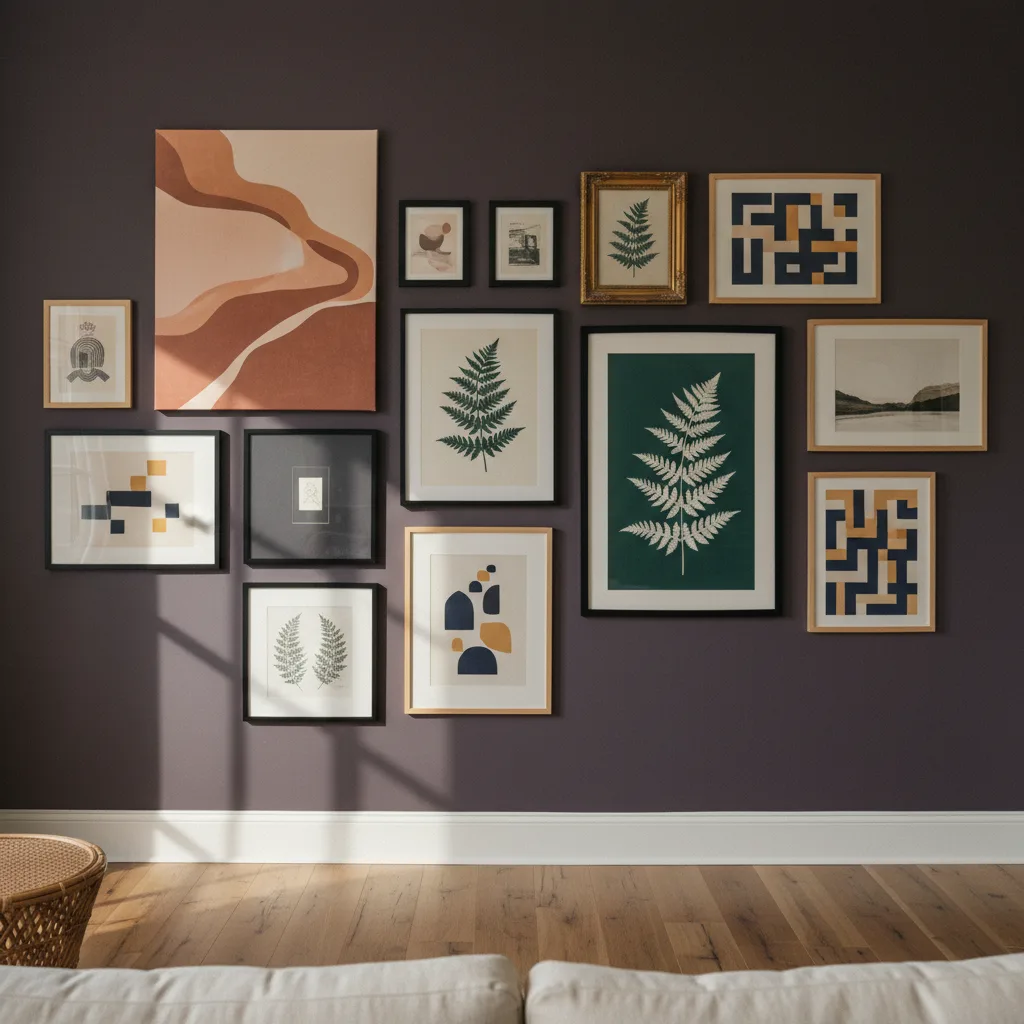
Pick one variable and repeat it. That's it. If every frame is different, every subject is different, and every color palette is different, nothing holds together. But if you run the same frame color across twelve prints, you can throw almost anything on the wall and it reads as deliberate. Same logic with a dominant color - pull a burnt orange from one print and make sure it shows up in at least three others. The eye finds the thread and follows it. Without that thread, people just see noise.
This is why themed wall art collections work so well in maximalist rooms. A set of car prints, all shot in similar light, all framed black - that's a wall that looks like a decision, not an accident.
Scale: where most people get it wrong
The instinct is to buy small prints and fill every gap. Wrong. You need at least one piece that's genuinely large - something that anchors the whole arrangement. A 24x36 canvas in the center, then smaller pieces radiating out. Without that anchor, the eye doesn't know where to land, and the whole wall feels restless.
Small prints on their own look like they got lost. Group them tight, no more than two inches between frames, and suddenly they read as one big composition. Wide gaps kill the density that makes maximalism work. Close the gaps.
Color: commit or fail
You do not need a monochrome wall. You need a dominant color. It can be deep navy, forest green, warm terracotta - pick one and make sure it shows up in the majority of what you hang. Everything else can contrast against it, but there needs to be something that keeps pulling the eye back to a common reference point.
Abstract prints are genuinely good for this because you can hunt specifically for pieces that hit your color - check the abstract wall art section and filter by mood rather than subject. A moody dark-background abstract next to a high-contrast car print works if they share the same black-and-gold palette. It shouldn't work, but it does.
Subject mixing - how much is too much
More than most decorating articles will admit. A golden retriever print next to a Porsche print next to a neon cyberpunk cityscape can absolutely share a wall. The subjects don't have to relate. What has to relate is the treatment - similar contrast levels, similar saturation, similar framing. If they're all high-contrast and all in dark frames, the viewer reads 'this person has strong taste' rather than 'this person has no taste.'
What doesn't work is mixing very different print styles - a soft watercolor next to a sharp photorealistic car print. The visual language is too different. They fight. Either commit to graphic and bold across the board, or soft and painterly across the board.
The gallery wall layout question
Lay it on the floor first. Seriously. Arrange the prints on the floor until the grouping feels right, photograph it, then transfer it to the wall using that photo as reference. The number of people who skip this step and end up with a dozen nail holes in the wrong places - it's a lot.
Asymmetry is fine. Actually better than a rigid grid in most rooms. The grid looks good in very modern, minimal spaces; in a room that's already got personality, a looser arrangement feels more lived-in. One large piece slightly off-center, a cluster of four or five to the right, two vertical prints stacking on the far left. That kind of thing.
What to actually buy for maximalist wall art
Bold subjects. High contrast. Avoid anything too soft or too beige - it'll disappear the moment you put something stronger next to it. Cars, animals with strong graphic presence, abstract prints with real color in them, architectural photography. The full wall art catalog has enough range that you can build a cohesive maximalist wall without ordering from six different places and hoping the quality matches.
Canvas for the large anchor pieces - the texture reads well at scale. Posters in frames for the smaller cluster pieces. Mix the formats and you get depth without spending a fortune on canvas for every single print.