A pet memorial portrait is one of those things that sounds like a nice idea until you actually sit down to order one, and then it hits you again. This guide is about making that process easier - picking the right format, giving the artist what they need, and ending up with something you actually want on your wall instead of something that makes you sad every time you walk past it.
What makes a good reference photo
This is where most people mess up. They submit the only photo they have from the dog's last week, or a blurry birthday shot from 2019, and then wonder why the portrait looks off. Artists - whether human or AI-assisted - are only as good as what you give them.
You want a photo where both eyes are visible, the light is hitting the face from the front or slight side, and the animal is not in motion. Outdoor daylight photos are usually the best. A photo where your pet is looking directly at the camera is ideal. If you have ten decent options, send three or four - a front shot, a three-quarter angle, one that shows the markings or coloring clearly.
Avoid: flash photos with red-eye, heavily filtered Instagram shots, anything shot on zoom from across a room.
Choosing the right style for a pet memorial portrait
Realistic portraits are the default choice and they work, but they are not always the right one. A hyper-realistic oil painting style can look amazing, but it also means every detail of the animal's face is front and center - which some people find comforting and others find harder to look at. Worth thinking about before you commit.
Watercolor and painterly styles soften the image slightly. They feel less like a photograph and more like a memory, which for some people is exactly the point. Abstract or pop-art versions (think Andy Warhol-style) go further - you still recognize the animal but the emotional weight is lighter because the whole thing is a bit playful.
At EnjoyPoster's pet wall art section, you can see how different styles read at actual print size, which helps you make the call before ordering a custom piece anywhere.
Canvas or poster - which one actually holds up
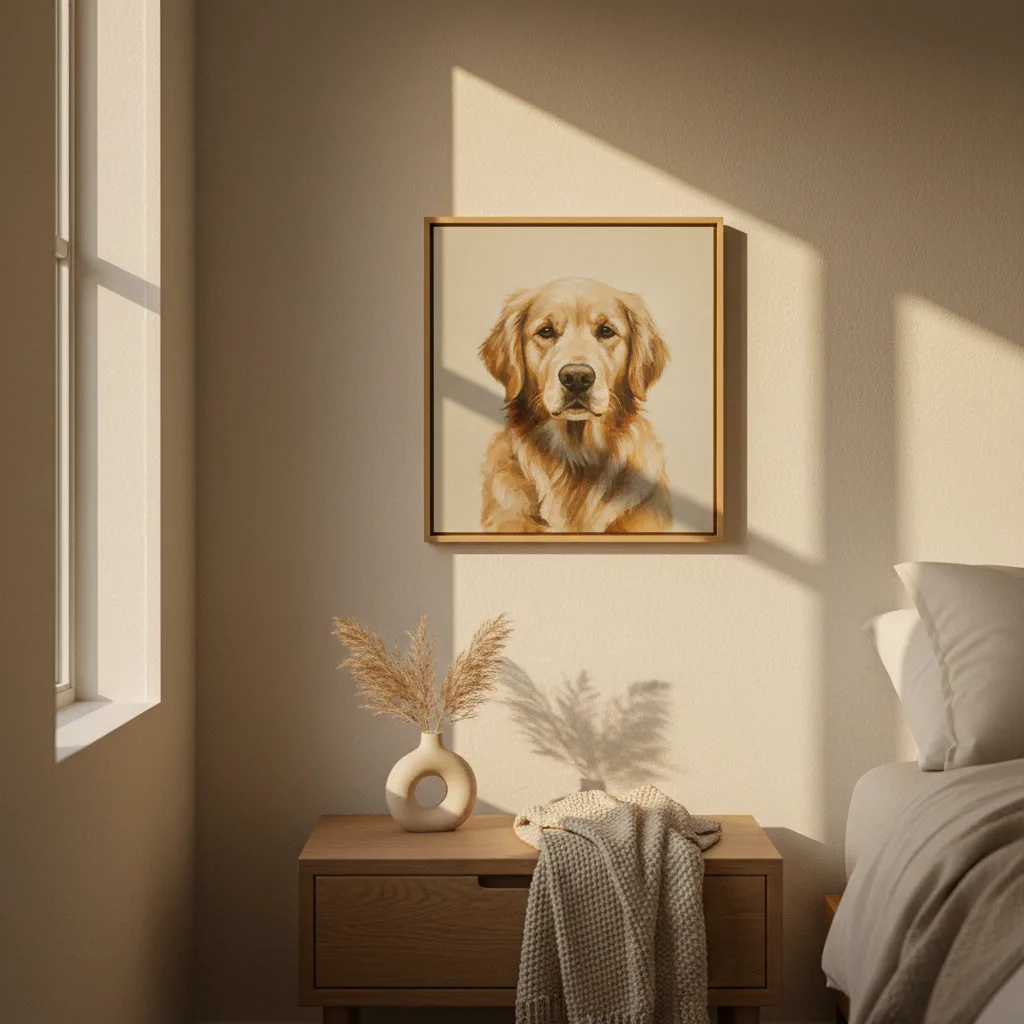
Canvas prints are the standard answer and usually the right one for a memorial piece. They have depth, they look like art, and they age well. A poster print can look great too, but frameless posters have a way of feeling temporary - which is maybe not the vibe you want for something this permanent.
Metal prints are worth considering if the photo has strong contrast and the animal had striking markings. Black cats, Huskies, Dalmatians - the metallic surface does something interesting with high-contrast images. Less so with soft golden browns, where canvas wins comfortably.
Size matters more than people expect. Something like 12x16 or 16x20 is usually enough. Going bigger does not make it feel more meaningful, it just makes it harder to hang somewhere that feels right. Most people end up putting these in a bedroom or home office rather than the main living area, so keep that in mind when picking dimensions.
How to write the brief without overthinking it
If you are commissioning from an artist rather than using a print service, you will need to write some kind of brief or fill out a form. Keep it simple. Name, breed, one or two personality notes if the artist asks ("very goofy, always had his tongue out" is genuinely useful), and your format preference. That is it.
Do not write a paragraph about your grief. Artists are trying to capture the animal, not your relationship with the animal. The portrait will carry that on its own if it is done well.
What to do if it doesn't look right
Most decent services offer a revision round. Use it. If the eyes are wrong, say so specifically - "the left eye looks too small compared to the photo" is useful. "It doesn't look like him" is not, and it puts the artist in an impossible position.
If you went with a print-on-demand style portrait and the result is off, honestly, try a different style rather than asking for endless tweaks on the same one. Sometimes a watercolor version clicks where a realistic one didn't, and you can see both options through the pet prints category before committing to anything custom.
Turning the portrait into something more than wall art
Some people want more than one thing. The canvas goes in the bedroom, and then something smaller for the desk. A mug with the same image is not everyone's style but plenty of people love having it as a daily object rather than just something to look at. Custom mugs and phone cases are both reasonable options if you want the image somewhere more present in your day-to-day.
A postcard version printed from the same file also makes a quiet, low-pressure way to share the portrait with family members who also knew the animal - postcards ship cheap and feel more personal than a digital file.