If you're trying to figure out how high to hang wall art and every answer you've found says "eye level" without giving you a real number, this is the piece you needed to find. The number is 57 inches from the floor to the center of the artwork. That's it. The rest of this article is context for when to use it, when to bend it, and how to do the math yourself so you're not guessing with a hammer in your hand.
Why 57 inches - and where that number comes from
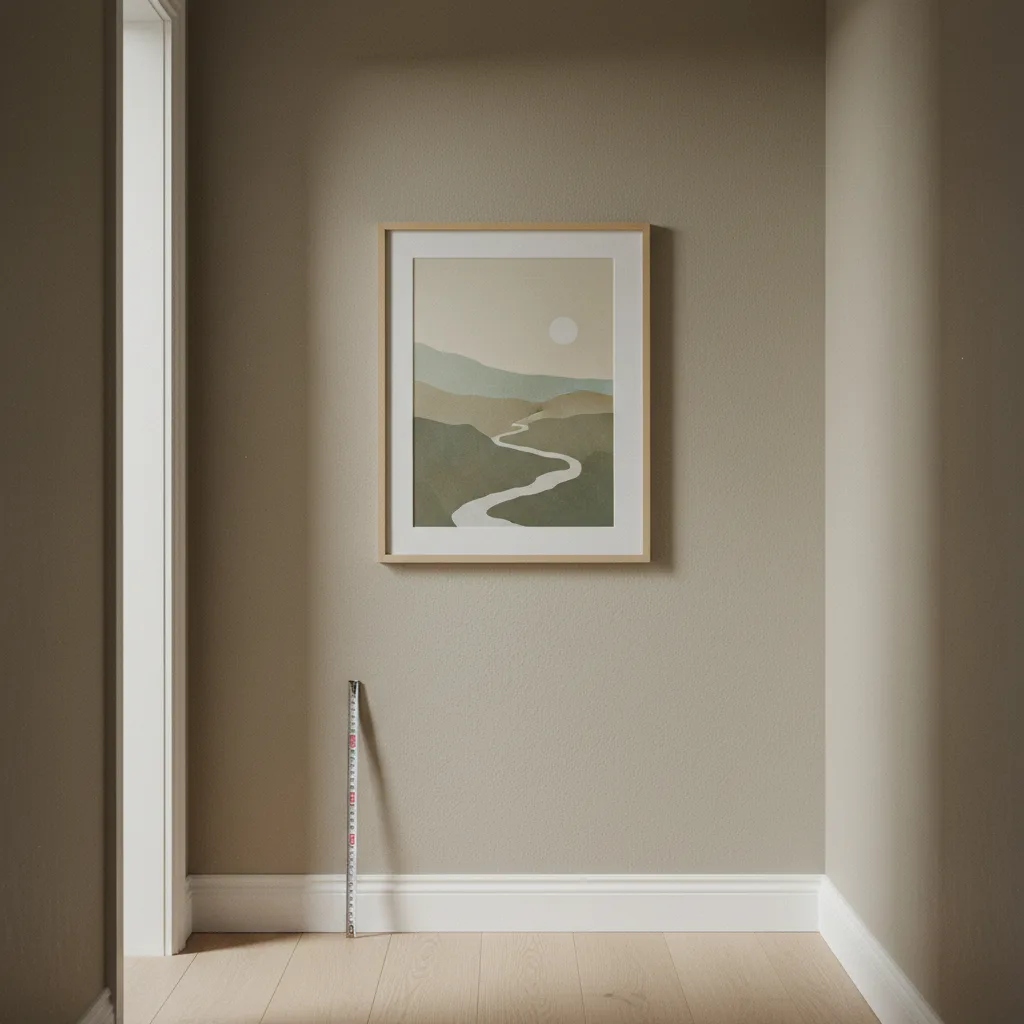
Museums settled on 57 inches as the standard center-hang height decades ago. It corresponds roughly to average human eye level when standing. Not the top of the frame, not the bottom - the visual center of the piece. When you walk into a gallery and nothing feels off, this is usually why. The art meets your gaze instead of making you look up or down.
Most people hang too high. It's an almost universal mistake, and it happens because when you're holding a picture against a wall and stepping back, high feels "safe" and "airy." It's not. It just makes the art float away from everything else in the room.
The actual math for how high to hang wall art
Take your artwork. Measure its total height. Divide by two - that's the distance from the top edge to the center. Now measure your hanging hardware (the wire, the bracket, whatever you're using) and note how far it sits from the top edge when the frame is hanging. Subtract that from the center-to-top number. That final figure is how far above 57 inches you put your nail.
Example: a print that's 24 inches tall. Center is at 12 inches from the top. Wire hangs 2 inches from the top. So 12 minus 2 = 10. Nail goes at 57 + 10 = 67 inches from the floor. Simple subtraction. You don't need an app for this.
When to ignore the 57-inch rule
Furniture changes everything. If you're hanging wall art above a sofa or a bed or a console table, the relationship between the art and the furniture matters more than the floor. The standard here is 6-8 inches of gap between the top of the furniture and the bottom of the frame. Any more than that and they look like strangers sharing a wall. Any less and it feels like the art is about to fall on you.
So above a sofa: measure the sofa's back height, add 6-8 inches, that's your frame bottom. Then work upward from there. The 57-inch rule becomes a sanity check rather than the primary guide.
Stairwells are a different problem entirely. The floor keeps dropping, so a fixed measurement fails. The trick there is to follow the diagonal line of the stairs - keep the center of each successive piece about 8 inches above the previous one, measured along that angle. It looks intentional because it is.
Gallery walls - the one time the single-piece rules don't apply
For a gallery wall, treat the entire cluster as a single piece and apply the 57-inch rule to the optical center of the whole arrangement. Lay it out on the floor first. Seriously - tape the shapes to the floor until you're happy, then transfer the arrangement to the wall. Starting with a nail and adding outward is how you end up with something lopsided that you live with for three years because re-patching feels like too much work.
Spacing between frames in a gallery wall: 2-3 inches feels tight and intentional. 4-6 inches is airy. More than that and it stops reading as a group.
Ceiling height adjustments
The 57-inch standard assumes a standard 8-foot ceiling. If your ceilings are 9 or 10 feet, you can push up to 60 inches without it feeling wrong. The room has more vertical space and the art can breathe a little higher. But don't overdo it - 65 inches and above starts to feel like you're decorating for giants.
Low ceilings (under 8 feet) actually benefit from keeping art lower, closer to 54-55 inches. It grounds the space instead of competing with how little vertical room you have.
One more thing people get wrong
Scale. A small print on a big wall hung at the perfect height still looks wrong because it's undersized for the space. If you're shopping for canvas prints or posters, size up more than feels comfortable in the store or on a product page. A piece that seems big on a desk looks modest on a wall. This is probably the most common regret people have after hanging - not height, but size.