Figuring out how to buy your first piece of art is genuinely confusing - not because art is complicated, but because there's a mountain of bad advice designed to make you feel like you need a degree before you're allowed to hang anything on your wall. You don't. What you need is a clear head and a few questions worth actually asking.
Start with the wall, not the feeling
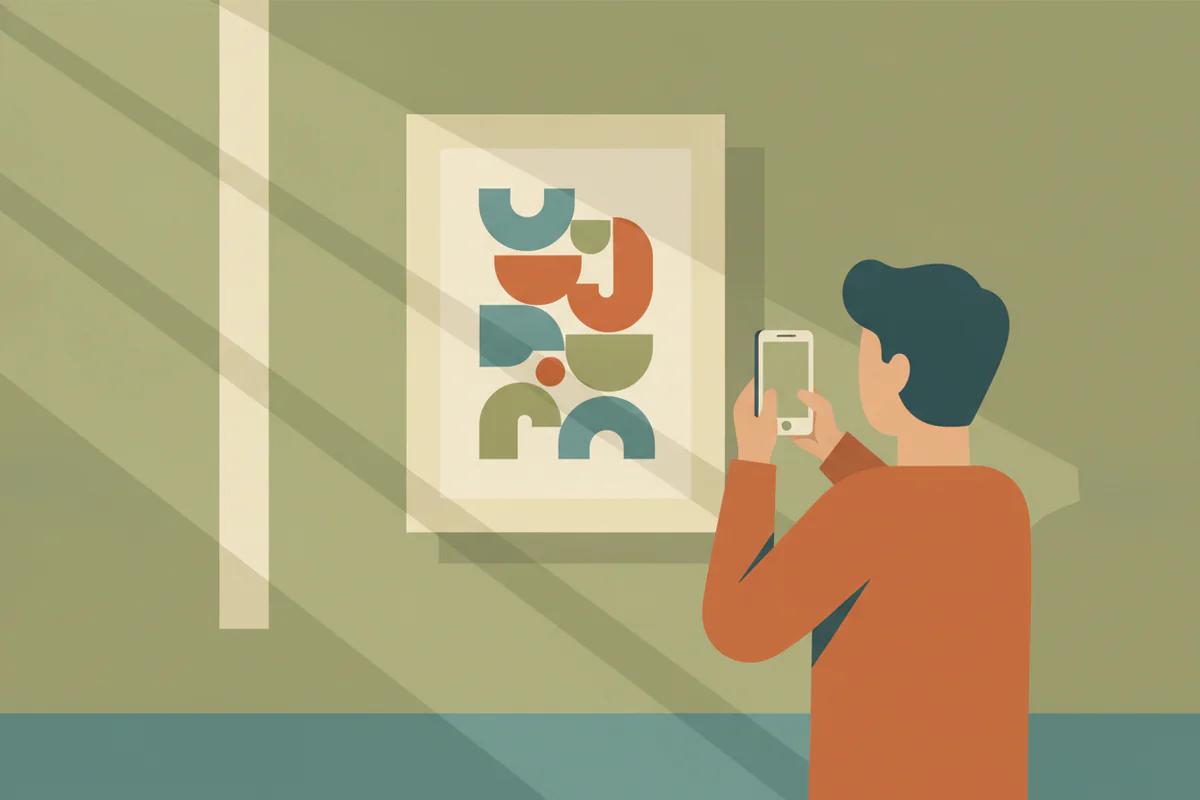
Most people start with a vague mood - "I want something calming" or "I want something bold" - and then spend two hours scrolling, getting nowhere. Flip it. Start with the specific wall. How big is it? What's on either side? What's the light like in that room at noon versus 6pm? A dark, narrow hallway does not want the same print as a wide living room wall with afternoon sun hitting it.
Measure the wall. Seriously - measure it. Write it down. A print that looks massive in a product photo can disappear on a real wall, and one that looks manageable online can eat a whole room. Most interior designers say art should take up 60-75% of the wall width it's hanging on. That number alone saves a lot of buyers' remorse.
The one rule about style that actually holds up
Buy what you'd stop and look at twice. Not what matches your sofa. Not what your friend said is popular right now. If you stop scrolling for it, that's the signal. The matching-the-room logic sounds sensible but it produces forgettable rooms - everything coordinates, nothing has any pull.
That said, contrast is your friend. A sharp automotive print - something like a Porsche or a Mustang shot tight - on a light neutral wall hits harder than the same print on a wall that's already busy. The print does the work when you give it space.
How to buy your first piece of art without overspending on the wrong thing
You do not need to spend a lot. The idea that cheap prints are somehow lesser is mostly gatekeeping. A well-printed poster at the right size on the right wall looks better than an expensive original in the wrong spot. What matters is print quality, size, and placement - in that order.
If you're testing a style or a room, start with a poster rather than a canvas. Less commitment, cheaper, and honestly easier to reframe or replace if your taste shifts in a year. Canvas prints are heavier and feel more permanent, which is great when you're sure - and annoying when you're not. Check out the wall art options at EnjoyPoster to get a sense of what's available across both formats before you commit to one.
Pick a category you actually care about
Abstract is the safe default, and there's nothing wrong with it, but don't pick it just because it feels neutral. If you're a car person, a high-quality JDM or BMW print will give you more long-term satisfaction than a watercolor splash you bought because it seemed inoffensive. If you have a dog you're obsessed with, a portrait print of that breed will make you smile every time you walk past it. That's not a small thing.
Art in your home should mean something to you specifically. Generic "nice" is the fastest path to pulling it off the wall in a year. Browse the car prints or pet prints if either of those is your world - the catalog goes deep.
Framing and finish matter more than people admit
The same image printed on matte paper, glossy paper, and metal will look like three different pieces of art. Matte is softer, easier in bright rooms. Gloss pops colors but shows every reflection. Metal prints have a cold, sharp quality that works well for cars, architecture, anything with hard edges. Know the finish before you order.
And if you're buying an unframed poster, budget for the frame at the same time. A cheap frame on a good print is still better than a good print rolled up in a tube because you never got around to it.
One last thing
Stop waiting until you "know enough" about art to buy some. You know what you like. That's enough. Put something on the wall, live with it for a month, and you'll learn more about your own taste from that one decision than from any amount of reading about it.