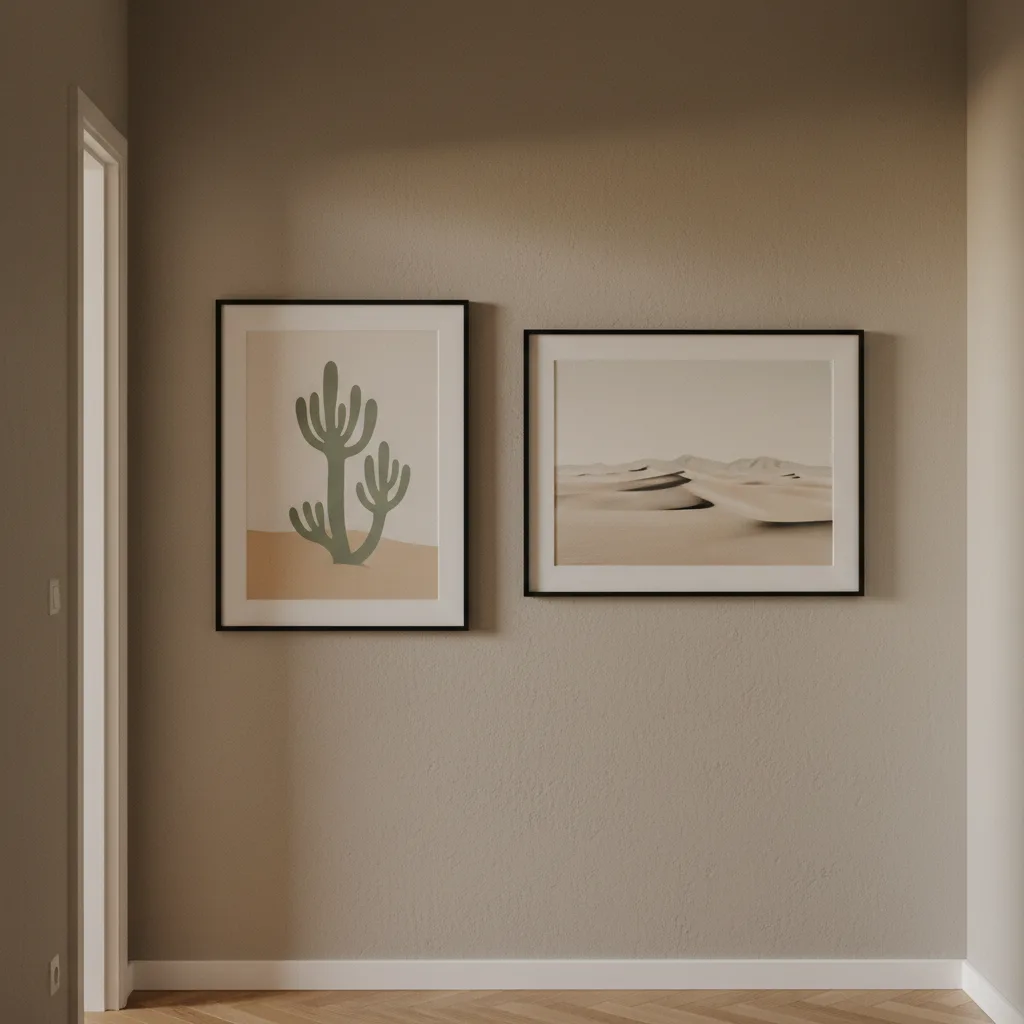
The vertical vs horizontal wall art question sounds minor until you hang something in the wrong spot and the whole wall feels broken. It's not about taste - it's about how your eye moves through a room, and the architecture is basically telling you what it wants if you know what to look for.
Vertical vs horizontal wall art: the quick rule
Tall, narrow spaces want vertical art. Wide, low spaces want horizontal art. That's the core of it. Your eye follows the dominant lines in a room, and art that fights those lines creates low-level visual tension you'll feel but probably won't name. A tall skinny canvas in a wide hallway above a long console table just sits there looking lost. A wide panoramic print crammed between two doors on a narrow wall looks like it's trying to escape.
Start with the wall itself before you think about the print. Is it wider than it is tall? Horizontal. Taller than it is wide - like a staircase wall or the space between two windows? Vertical.
Where vertical art actually works
Staircase walls are the obvious one. The eye is already moving upward, and a vertical canvas - or a column of smaller prints - follows that movement instead of fighting it. Same with the wall above a toilet in a half-bath, which is almost always narrow and tall. People underestimate that wall. It's one of the better spots in the house for a single bold vertical print because you have a captive audience and not much competition from furniture.
Tight spaces between windows or doors are also natural vertical territory. A 12x36 or 16x48 print fits there cleanly. A wide horizontal piece would just get cropped by the frames on either side, visually speaking.
And bedrooms - above the headboard specifically - are more flexible than people think, but a tall vertical pair on either side of the bed works better than most people expect. It draws the eye up and makes the ceiling feel higher.
Where horizontal art works
Above a sofa is the classic case, and the reason is practical: sofas are wide and low, and you need the art to match that horizontal weight or the wall looks top-heavy. The standard guidance is that the art should be about two-thirds the width of the furniture below it. A 20x20 square print above a three-seat sofa just floats there. A 40x20 or wider piece anchors it.
Same logic applies above a bed when you go with a single piece instead of a pair - a wide horizontal canvas sits naturally over the headboard and mirrors the bed's shape. Above a fireplace mantel too, assuming the firebox opening is wider than tall, which most are.
Long hallways work well with horizontal art arranged in a row. The format extends the perceived length rather than interrupting it with competing vertical shapes.
The furniture relationship matters as much as the wall
A lot of people measure the wall and ignore the furniture in front of it. That's backwards. The furniture is the visual anchor, and the art needs to respond to it. Low, wide furniture - credenzas, media consoles, sectional sofas - pulls toward horizontal. Tall, narrow furniture - a single armchair, a console with vertical legs, a bookshelf - is more forgiving of vertical art alongside it.
If you're hanging art with no furniture beneath it (like on an open wall or above a staircase landing), the wall proportions take over as the guide.
When the answer is a gallery wall
Sometimes neither orientation dominates and you have a mid-sized wall that doesn't clearly favor one direction. Gallery walls solve this by mixing both - a couple of horizontal prints, a vertical one, a square in there - and the variety is the point. It reads as collected rather than placed. The only rule worth following is keeping consistent spacing (usually 2-3 inches between frames) so it doesn't look accidental.
If you want to try this, browsing the full wall art catalog by subject rather than size works better - find the images you actually want first, then figure out the arrangement. You can also mix print types. A canvas print next to a poster next to a metal print adds texture the eye finds interesting.
A note on prints with a strong internal orientation
Some images just have a built-in direction. A tall portrait, a standing figure, a vertical cityscape shot from street level - these want a vertical format regardless of where you're hanging them. A wide landscape, a car shot from the side, a beach horizon - horizontal, almost always. Fighting the image's own orientation is where things go wrong. Car prints are a good example: a side-profile shot of a Porsche or a Mustang printed on a vertical canvas looks cropped and awkward. The car wants width.
Read the image first. Then match the format. Then check it against the wall. In that order.