If you're trying to figure out how to hang wall art in a rental without torching your deposit, you've probably already read twelve articles that just say "use Command strips" and call it a day. This isn't that. Some methods work great, some are fine for light stuff, and a couple are genuinely bad ideas that keep getting recommended anyway. Here's what actually matters.
The deposit risk is real, so let's be honest about it
Most standard leases say you're responsible for any wall damage beyond normal wear. A tiny nail hole from a single print probably won't cost you anything - most landlords ignore those. But a blown-out drywall anchor from a heavy canvas, or thirty adhesive squares that pull paint when you remove them, absolutely will. The goal isn't zero holes. The goal is zero damage you can't fix in five minutes before move-out.
How to hang wall art in a rental: 5 methods compared
1. Adhesive strips (Command-style)
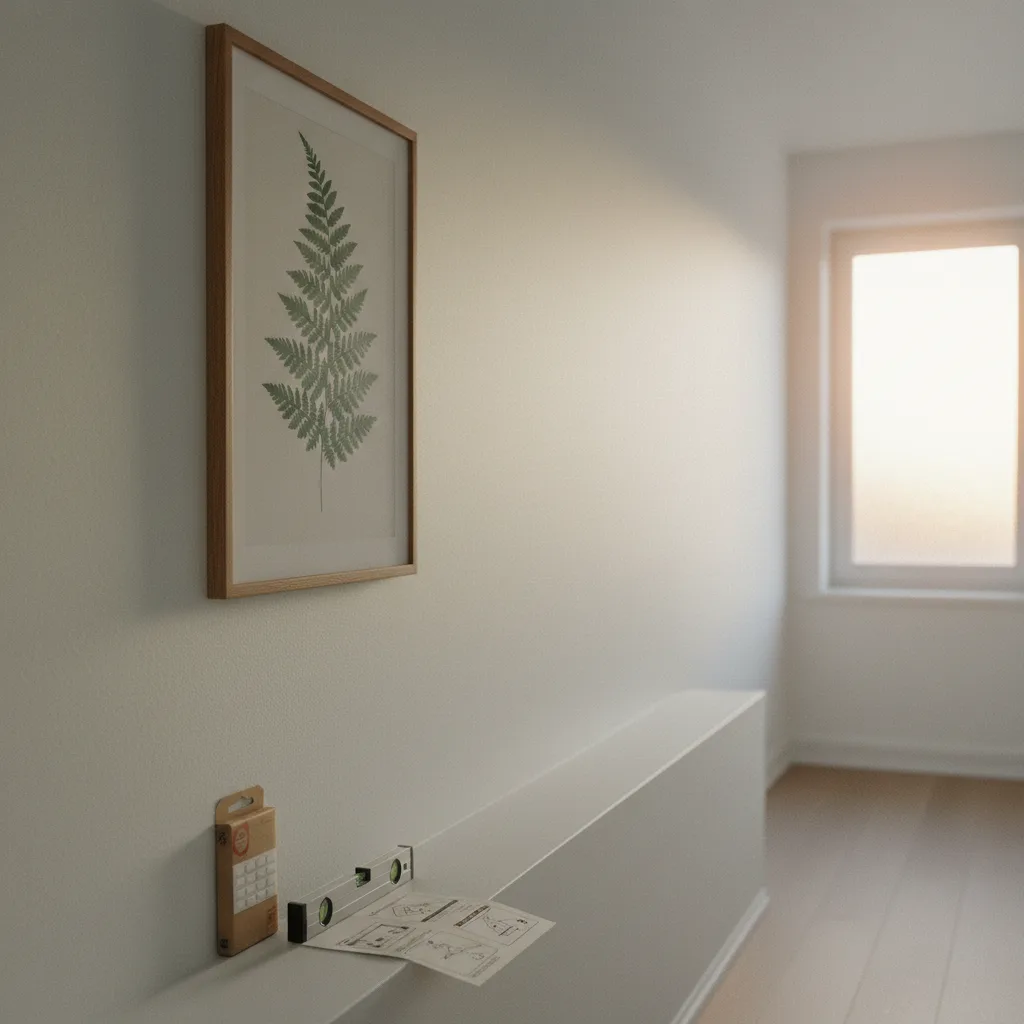
The obvious one. They work well for posters and light frames - anything under about 4 lbs. The catch is removal. You have to pull the tab slowly, straight down, at a low angle. Rush it or yank sideways and the paint comes with it. Also, they fail in humidity, so don't use them in a bathroom or near a window that sweats in summer. For a canvas print or a small framed poster, this is genuinely your best option if you follow the instructions.
2. Adhesive hooks
Same adhesive technology, different shape. Good for hanging a single print by a wire or sawtooth bracket. Weight limits are usually listed on the pack and they're not lying - stay under them. These are what I'd use for a poster in a spot where I want it to stay for a year or two without thinking about it again.
3. Tension rods and wire systems
Underrated. A tension rod in a doorway or across a window recess, with wire and clips hanging down from it, can hold a rotating gallery without touching the walls at all. It looks intentional if you do it right, and removal is just lifting the rod out. Not useful for every room layout, but when it fits, it's the cleanest solution here.
4. Leaning and shelf stacking
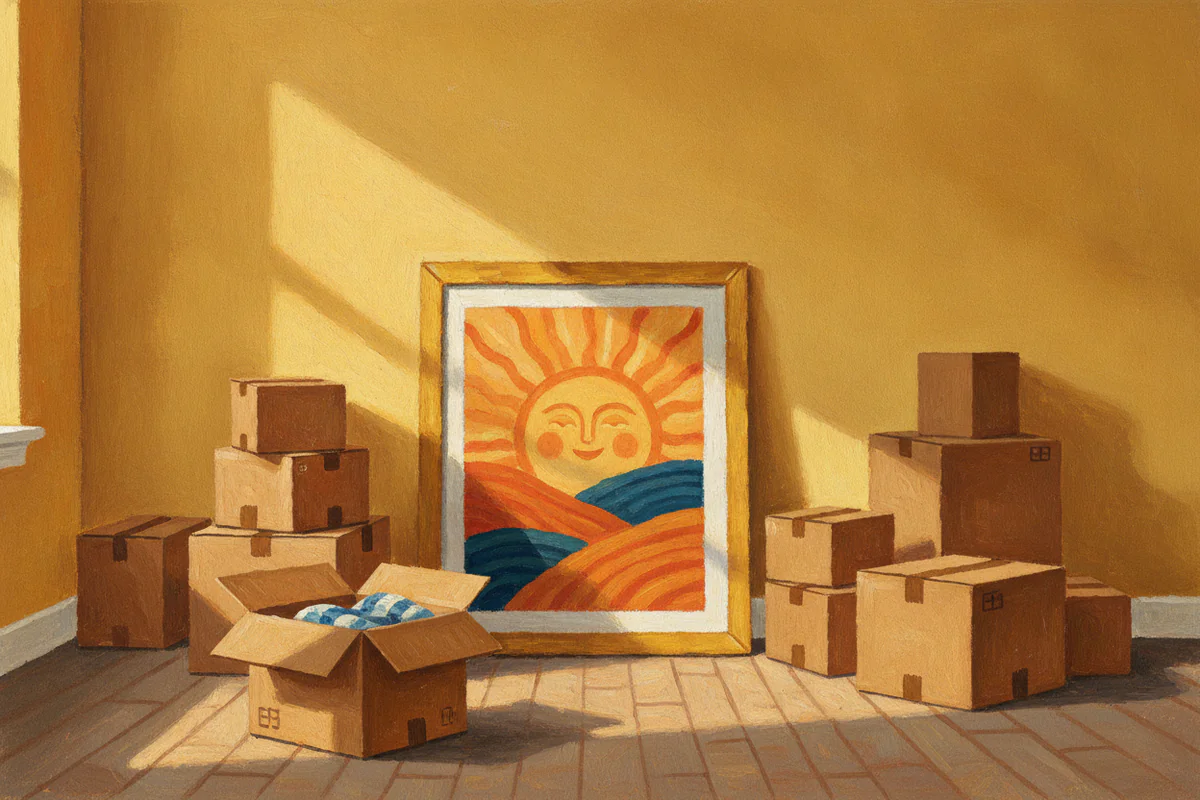
Put a deep shelf on the floor - or use an existing mantle, console table, radiator cover - and lean prints against the wall. A larger canvas print does this naturally and looks fine. Stack a few different sizes. The practical problem is stability: anything below about 16 inches tall tends to slide and topple. Taller prints lean more securely. This is legitimately good for living rooms where you want a relaxed, collected look rather than a gallery grid.
5. Small nails and picture hooks
A small finishing nail at a 45-degree angle leaves a hole about the diameter of a toothpick. Fill it with a dab of white toothpaste or spackle on move-out day and it disappears. I know this feels like cheating on a "damage-free" list, but for anything over 10 lbs this is actually safer than adhesive strips that might fail and drop a canvas at 2am. If your lease specifically bans all holes, skip it - but most leases have language about "normal wear" that covers a single small nail hole per room.
What to skip
Foam mounting tape that isn't specifically designed for wall removal. Double-sided tape from the office supply aisle. Those plastic self-drilling anchors that turn a small hole into a large one. And please - no hot glue directly on a wall, which is an actual thing people have apparently tried.
A note on heavier pieces
Metal prints weigh more than posters. A large canvas over 20x30 inches starts to get heavy. If you're ordering something substantial - a big automotive print, a landscape canvas - check the finished weight before you commit to adhesive-only hanging. Sometimes the right answer is one small nail. The deposit math usually favors a $3 spackle job over a dropped print and a cracked frame.
Browse the full wall art catalog and check the size and substrate options before you hang anything - knowing what you're working with makes the method choice obvious.